
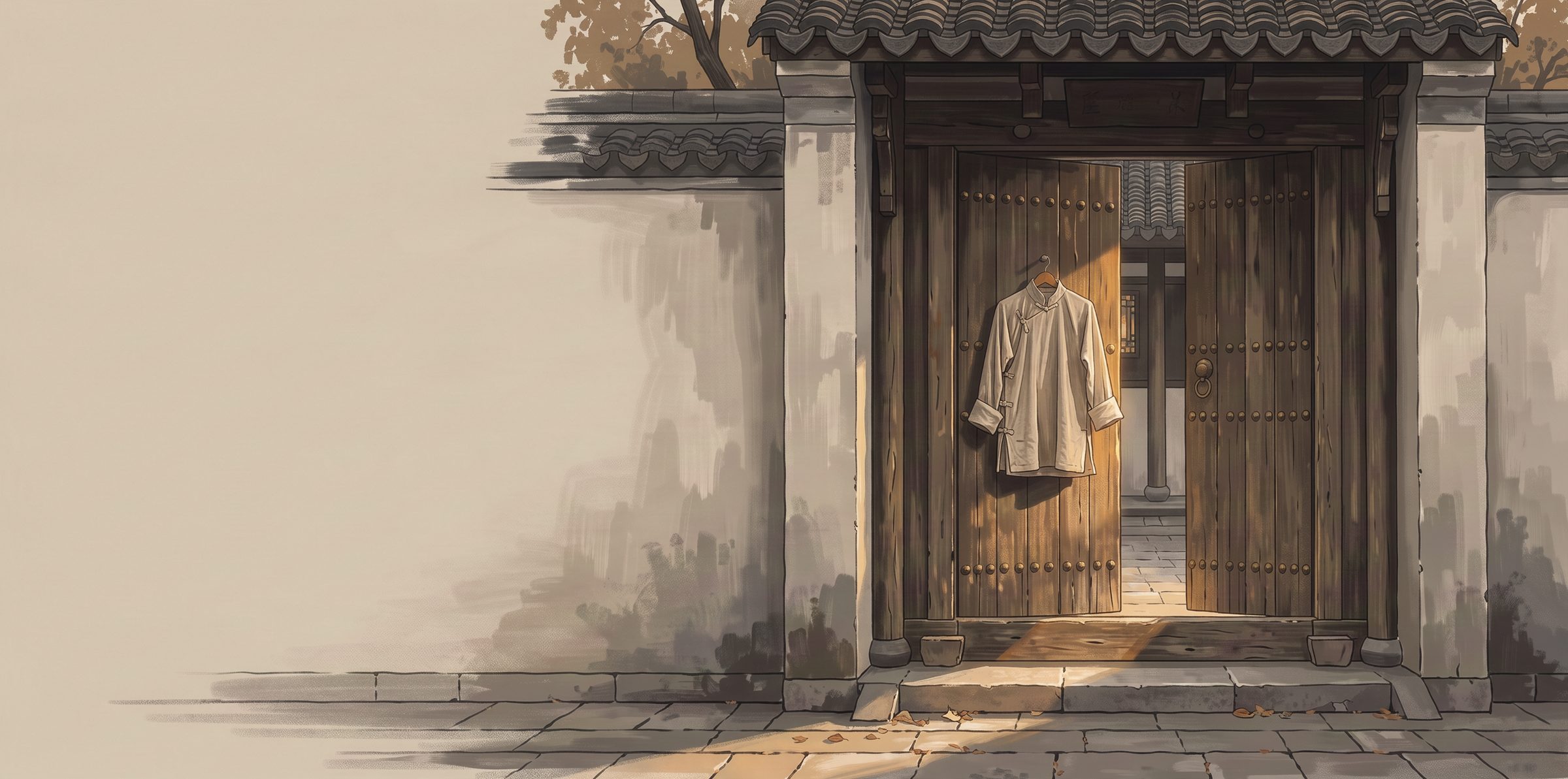
Introduction
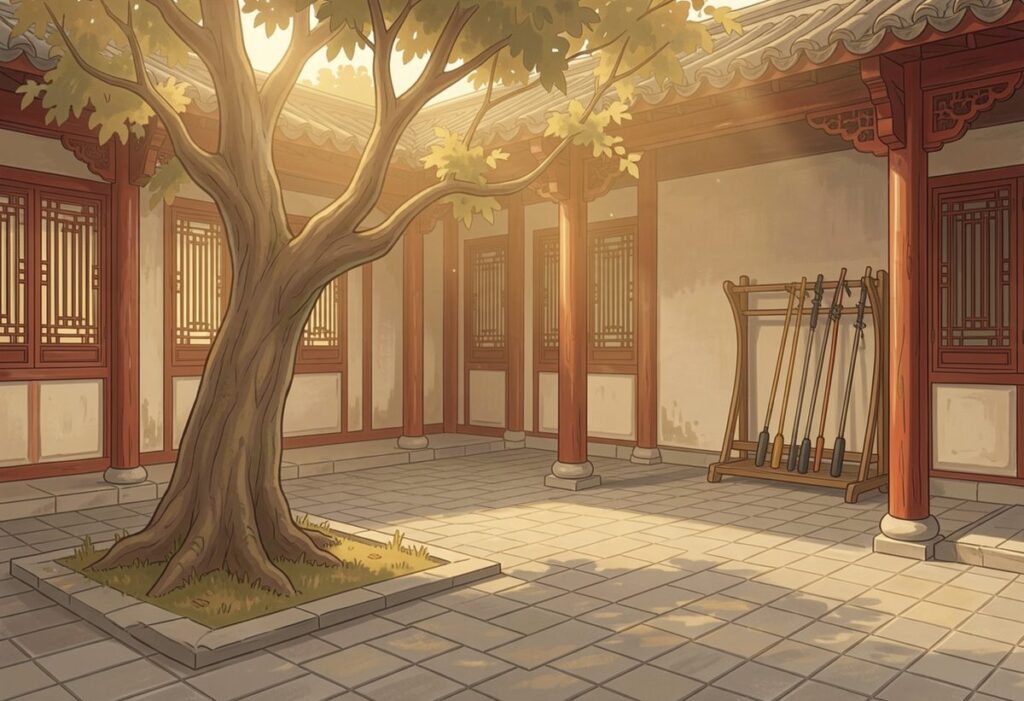
In modern cities overloaded with information and moving at a hurried pace, more and more people are turning inward, hoping to find smoother breathing and inner settledness beyond the tension of daily life.
“Fly by Knight” (夜奔) began as a brand born in a courtyard guesthouse in a Beijing siheyuan, and has gradually grown into a cultural community that moves between martial arts, clothing, traditional medicine and contemporary lifestyle aesthetics. So what exactly is Fly by Knight? It is not the doctrine of any single school, nor an unchanging symbol of nostalgia.
Today, through the personal perspective of Shaokai, one of Fly by Knight’s core partners, we talk about how his background in biochemistry and his Taoist thinking reveal another possibility for martial arts in our time, and we also look at how Fly by Knight, layering many viewpoints with an open and neutral stance, keeps exploring what it truly looks like for “Eastern mind-body experience” to become part of modern daily life.
1. A Chance Encounter: Pushing Open a Door to the “Great Swordsman” in a Siheyuan
The journey began in 2011, just as Shaokai finished graduate school. He had gone to visit his father, who worked in Shanghai, and then headed north alone with a backpacker’s spirit, staying at a distinctive siheyuan guesthouse deep in a Beijing hutong: “Fly by Knight Beijing.”
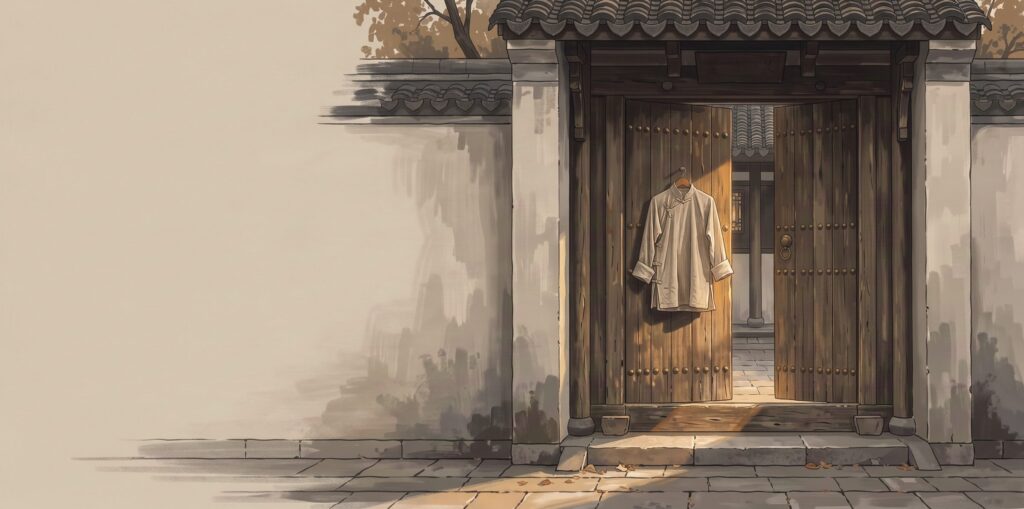
“I remember it clearly: pushing open that heavy door and feeling the solid weight of the door handle,” Shaokai recalls. In that courtyard he met the founder, Huang Hongxi (Daniel). Hongxi is a martial arts practitioner from Taiwan who led travelers from all over the world in practice inside the siheyuan and climbed up on the roof with them to watch the sunset. In an atmosphere so full of the chivalrous spirit of a “great swordsman,” Shaokai performed his first set of long fist (changquan) in his life, and a seed of “body exploration” was quietly planted.
Shaokai has a background in biomedical research and physiological pharmacy. As a student he did natural-drug research in Japan, and he later worked in nanomedicine research and in traditional Chinese medicine and herbal remedies, also earning qualifications in traditional bone-setting and manual therapy. This expertise spanning biotech, pharmacology and manual therapy meant that when he met Hongxi again several years later, a cross-disciplinary collaboration of several years began naturally, exploring the many possibilities of body culture from the perspective of brand and daily life.
2. An Extension of the Body: From the Siheyuan to “Martial Arts Worn on the Body”
Fly by Knight grew from a simple lodging space into clothing design, and at its root this came from practical observation of the “moving body.”
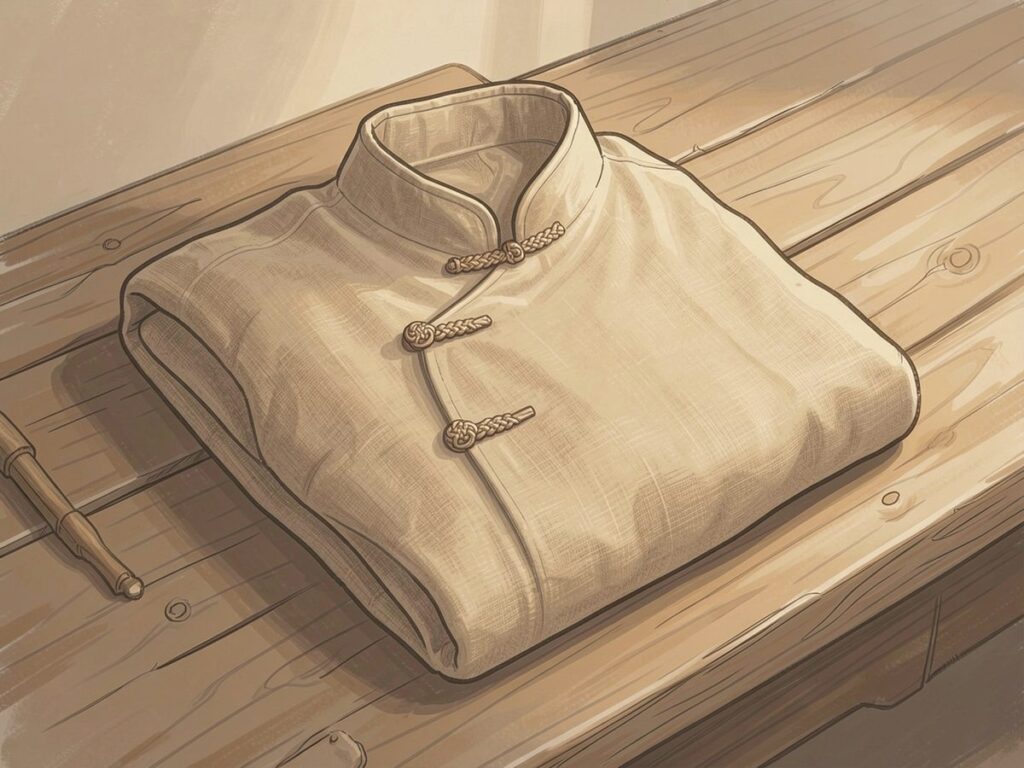
During the years of running the guesthouse, the team noticed that many traditional Chinese garments on the market use restrictive cuts to look crisp and upright, which in fact limits the movement of the joints. Led and planned by Hongxi, Fly by Knight took inspiration from the clothing of escort-agency guards (biaoshi) from Cangzhou in the north and developed the “Tongming Button” clothing series.
In the cutting logic of this clothing, Hongxi designed a unique “through-back design” that echoes the martial arts image of the “two hands connected through the back,” and the state in which the arms, shoulders and back generate force in linked motion. With a one-piece cut that joins the sleeves to the back, the garment follows the body’s movement, putting into practice the idea that “clothing is an extension of the body.”
Building on Hongxi’s solid design foundation, Shaokai goes on to share, from a brand perspective, the relationship between clothing, the body and daily life. When clothing no longer restricts the shoulders and back, wearing it returns to a natural state of movement. When this design launched on the overseas crowdfunding platform Kickstarter, it drew an enthusiastic response, and communities in Europe and the United States even saw it as a cultural revival of everyday dress. It also showed the team that traditional culture does not need to cater to the market; as long as it returns to the essential needs of the body, it can naturally strike a chord across regions.
3. Open Business Thinking: A Reference Point for a Lifestyle Community
When thinking about how culture can reach the public in a sustainable way, Shaokai, with his experience in biomedical research and business, often brings a different angle of observation.
In the past, people often saw traditional martial arts as a closed, non-mainstream niche market, but in Shaokai’s view it has every potential to improve the quality of modern life. Talking about community building, he once mentioned Lululemon and Alo Yoga in the Western yoga world, which, by building communities, connecting teachers and conveying the idea of awareness, turned one particular body practice into a healthy lifestyle that people all over the world aspire to.
Shaokai clarifies that this does not mean Fly by Knight rigidly “benchmarks” itself against some commercial brand or treats it as a set strategy. It is more of a thinking model worth referencing, one that shows that traditional culture does not need to be packaged in mystical rhetoric; it can fully blend into everyday life in a way that combines quality, community co-creation and professional aesthetics.
Today, when martial arts teachers from various schools teach in these clothes, or overseas groups come to Taiwan to try a morning boxing session, culture naturally shifts from “performance” to “everyday experience.”
4. The Way of Martial Arts in the Mirror: Mind-Body Exploration and Life Science Through Shaokai’s Eyes
When it comes to the cultivation behind martial arts, Shaokai prefers to share from his own practical experience rather than offer absolute definitions:
“Within Fly by Knight, I am like one of the mirrors, reflecting my own understanding of the body, medicine and life; Hongxi also has his own unique insights from many years devoted to passing on martial arts. These different understandings are exchanged and layered within Fly by Knight, and only gradually did it take the shape it has now. Taoism is a part I brought in, but Taoism is not the whole of Fly by Knight; Fly by Knight has always kept an open, platform-like and neutral character.”
In Shaokai’s personal understanding, he sums up this exploration in two entry points that complement each other:
1. Structure and power: understanding martial arts through the body
One of Shaokai’s entry points for understanding martial arts is structure and power. With a background in biomedical research and qualifications in traditional bone-setting and manual therapy, he habitually observes, from the viewpoint of anatomy and physics, how the body supports, links up and transmits force.
In his practice and teaching, the position of the skeleton, the movement of the joints and the cooperation of muscles and fascia are all clues to understanding a movement. How does a movement travel from the support under the feet, through the trunk, to the arms? Which places need to stay stable, and which need to keep room to move? These questions turn forms and techniques into concrete experiences that can be felt again and again through the body.
Meanwhile, the Taoist view of yin and yang offers another perspective for seeing relationships and change. Shaokai habitually looks at all things through yin and yang, understanding their dynamic rise and fall and the balance of “attaining harmony” (zhi zhonghe). Movement and stillness, relaxation and tension, emptiness and fullness all need to be understood within present conditions and mutual relationships. This way of seeing extends from body practice to his reflections on daily life and the patterns of nature.
2. Martial arts and medicine in dialogue: a life science of cultivating both nature and life
From nanomedicine research, to the traditional Chinese medicine and herbal health-food industry, and on to the study of martial arts and Taoism, Shaokai has kept exploring, through different kinds of knowledge and practice, how the body works and how a person relates to themselves.
Anatomy, fascia and meridians are all perspectives he uses to understand the body. Faced with the same movement or bodily sensation, he observes the structure and the way force is applied, while also drawing on the traditional medical understanding of overall connections, continually recognizing, comparing and sensing in practice.
This exploration also extends to breathing, diet, sleep, emotions and lifestyle habits. For him, “cultivating the self” (xiushen) includes understanding the structure of the body as well as observing one’s own behavior and every arising thought. Fine adjustments in practice and self-knowledge in daily life are therefore connected and reflect one another.
5. The Thread of Events and Exhibitions: A Work in Progress with “Cultivating the Self” as Its Clue
From the “Fly by Knight Martial Arts Gathering” held in the past to the exhibition “RYU (流)” now under way, Fly by Knight is using concrete venues to turn its ideas into lively places of dialogue.
In this space where things keep happening, Shaokai and the team hope that, through immersive experiences, workshops, reading groups and cross-disciplinary conversations, participants from different backgrounds can bring their own understanding of life, with “cultivating the self” as the common thread for their exchange. The various dimensions of perception in the exhibition echo one another, and what matters more is that, after leaving the venue, participants can take these bodily sensations and their questions about life back into daily life. Professional fields such as traditional Chinese medicine wellness teas and physical therapy are potential directions for collaboration to unfold gradually in the future, letting the platform keep accumulating possibilities in motion.
“Don’t chase the retro; find what is real, and see the essence.”
This is a shared understanding the team has kept in practice. Martial arts and traditional culture are not display pieces enshrined in a showcase, and there is no need to build towering walls between schools. In Shaokai’s vision, Fly by Knight is more like a friendly and open cultural platform: one that can welcome the internal-strength experience that old masters refined over a lifetime, and can also invite modern people interested in Eastern lifestyle aesthetics to take part with ease.
Closing
In Shaokai’s mind-body exploration, besides the pursuit of inner stability and balance, there runs throughout an endless curiosity about life, a keen sense of beauty and the pure joy that comes from hands-on practice. Through travel, reading, regular practice and candid exchanges with all kinds of people, he keeps an open mind, learning and refining his understanding in daily life.
The most captivating thing about traditional culture is not how sacred a historical label it carries, but that today it can still be a tool for understanding ourselves and exploring the world.
The story of Fly by Knight is still being written. When we lay down the burden of definitions and schools, simply stand firm and feel the connection between our feet and the ground, we find that martial arts and the Way have been there all along, in every real breath and every moment of sensing the body and life.
Upcoming Workshops and Experiences
Several different workshops and experiences are coming up: workshop post on Facebook
You are welcome to join! Fly by Knight official website: fbk.tw
Illustrations: Designed by Magnific