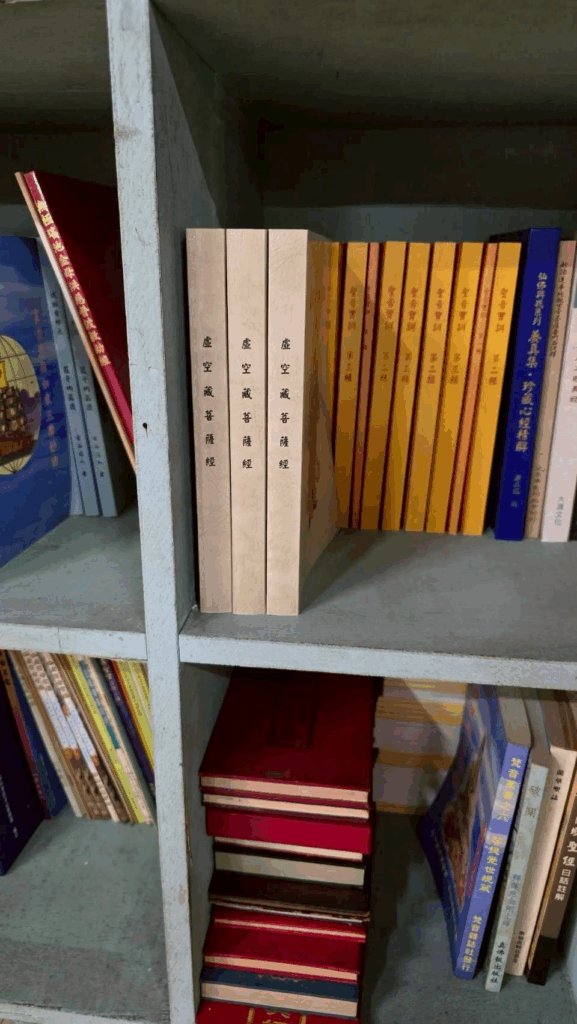


【Seven Chapters of the Wuling Road in the Snow Mountains】
【The Beliefs of Han Chinese Tribes in Wuling and the Surrounding Mountains of Lishan】
【The Goddess of Lishan and Mazu】
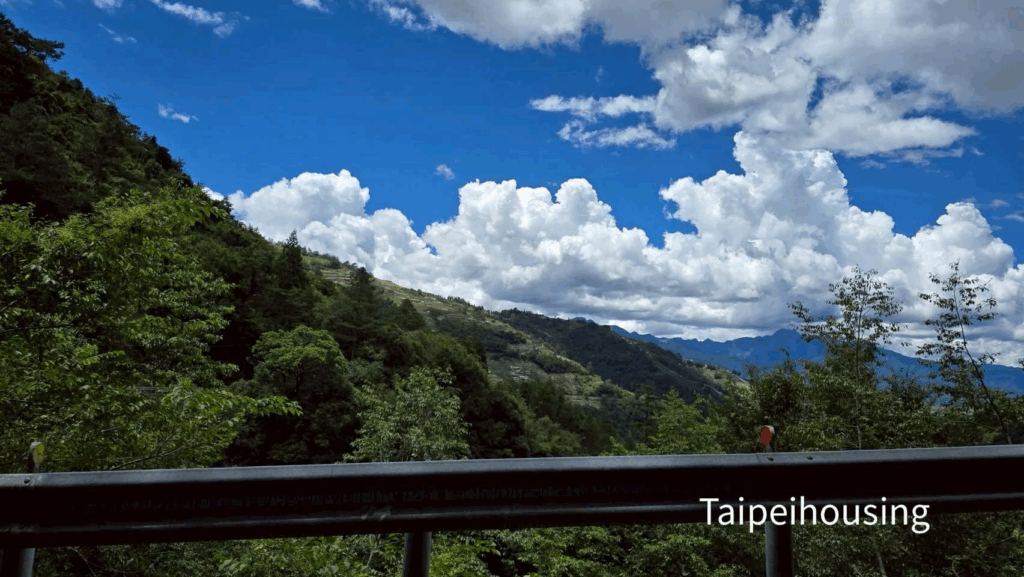
I’ve visited Wuling Mountain and Lishan several times, and while I haven’t seen any Buddhist temples, I’ve seen quite a few Taoist temples; the Wuling Mausoleum’s rear palace left a deep impression on me; I just discovered that there are many Mazu statues in this area;
https://share.google/MRLEyF9wdqNpTAhnO
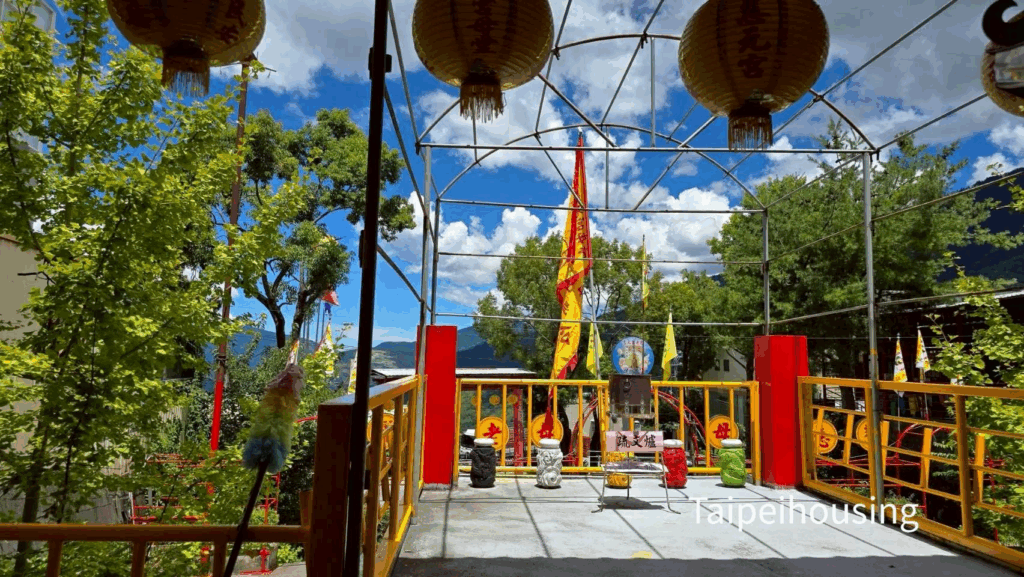
There are also many Lishan Laomu Temples; the Lishan Laomu Temple is extremely famous.
I couldn’t help but Google it out:
This place has the highest altitude Mazu worship in Taiwan,
because of the early prayers of the Hakka people who cultivated the Lishan area.
The following article on the internet is very detailed:
- The Guardian Deity of the High Mountains – The Mazu Belief of the Hakka People of Dalishan
- href=”https://www.lnanews.com/news/108999″ target=”_blank” rel=”noreferrer noopener”>Exploring the Scenic Spots of Lishan: Faith Elevated Through Bodhisattva Practice
There are 3 Mazu temples in Dalishan;
There are 3 Lishan Laomu temples in Dalishan,
both are the faiths of the Han people in the Dalishan area.
Lishan and Lishan are homophones! Lishan Tianlong Temple: 2050 meters above sea level, the highest Mazu temple in Taiwan.
Located in Heping District, Taichung City, Lishan Tianlong Temple is slightly lower in elevation than the temples mentioned above, but it is still worth mentioning as the “highest Mazu temple.” According to the temple, the late elder Mr. Lin Maosheng invited the Three Holy Mothers from Gangkou Temple in Dongshi Township, Chiayi County, to be worshipped in the Lishan area in 1960. The main deity worshipped is Mazu, with secondary deities including the Old Mother of Lishan, Guanyin Buddha, and the Marshal of the Central Altar.
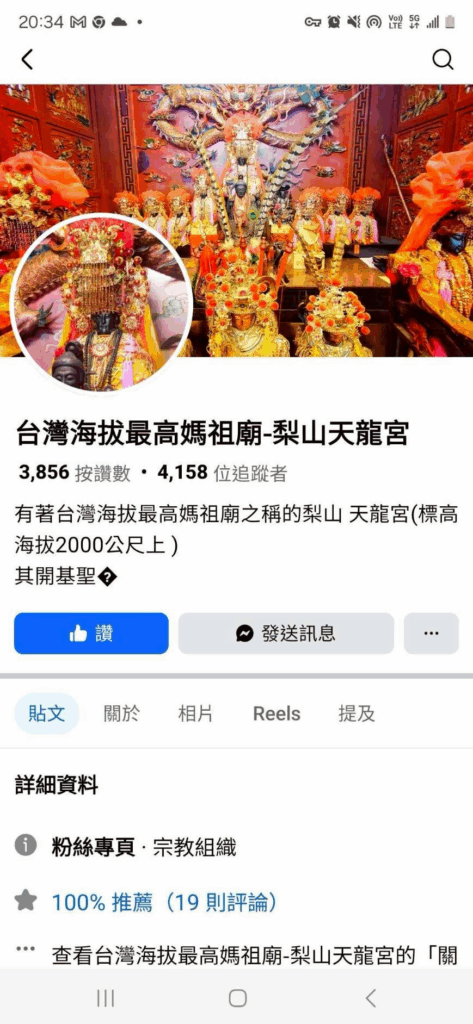
There is also the Lishan Laomu Palace in Xi’an on the other side (Original article)
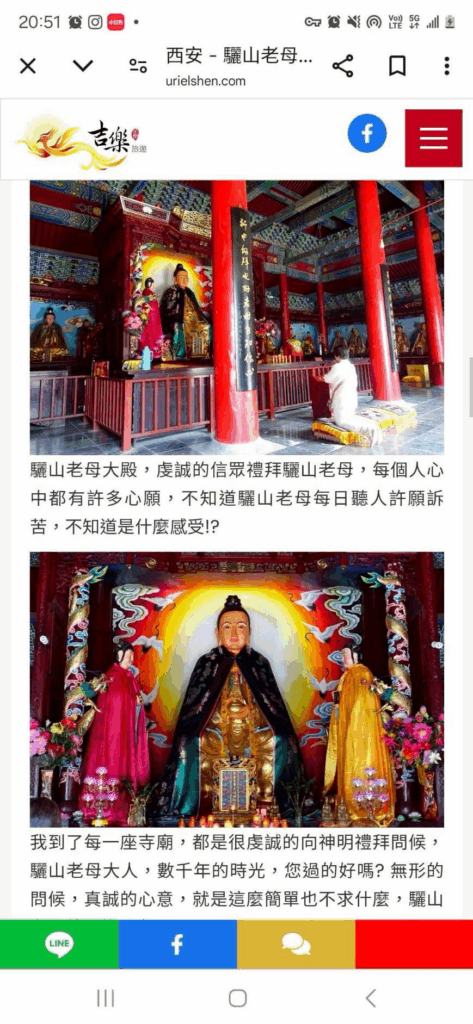
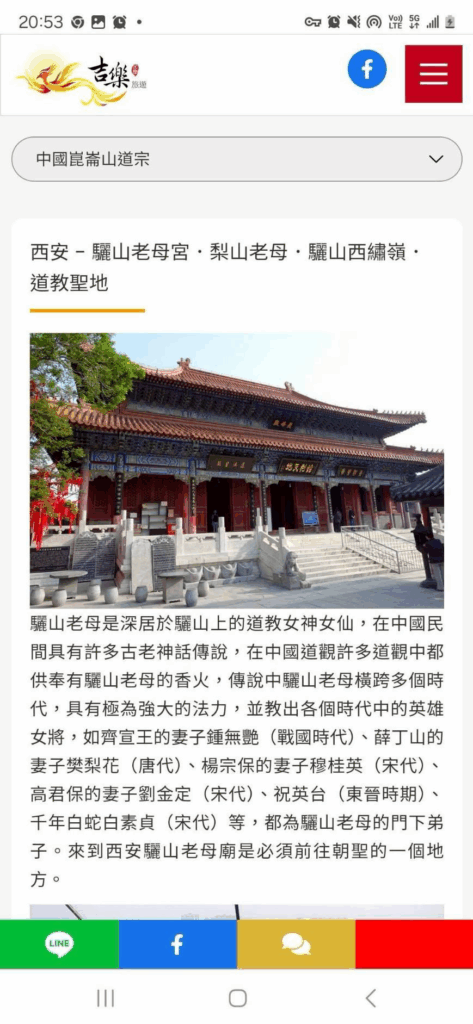
The Old Mother of Lishan is an incarnation of Doumu when she preached in the human world, and is related to Marici; the text is as follows
Wikipedia:
The Taoist classic *Lishan Laomu Xuanmiao Zhenjing* records that the Old Mother was an incarnation of Doumu, an ancient fairy of the Upper Eight Caves, with a kind and dignified appearance. She assisted the imperial family, loyally protected the dynasty and the country, and helped the Tang Dynasty enjoy peace.
(Original text: “The Yin Fu (陰符) can communicate with Heaven above, observe Earth below, and generate all things in the middle.”), philosophical interpretation of the Supreme Three Pure Ones, the Six Jade Books, the Innate Divine Formula, and the profound mysteries of the Nine Cauldrons Elixir Book; philosophical discussion of the Nine Immortals’ wondrous methods, the profound path of cultivation, and the Seventy-Two Transformations. The True Scripture also describes the great supernatural powers of the Old Mother of Lishan: “Above is the Way of the Immortals Embracing Oneness, in the middle is the Method of Enriching the Country and Securing the People, and below is the Art of Strengthening the Army and Winning Battles [4][5].” [6] The Mysterious True Scripture of the Old Mother of Lishan is the only Taoist classic that tells the origin of the Old Mother of Lishan. The Old Mother of Lishan is the incarnation of Doumu when she spread the Tao in the human world. She became the Goddess of Knowledge who is in charge of cultivating immortality and the Taoist arts of the Xuanmen, and inherited Doumu’s function of saving people from suffering and protecting the people.
Online Sharing:
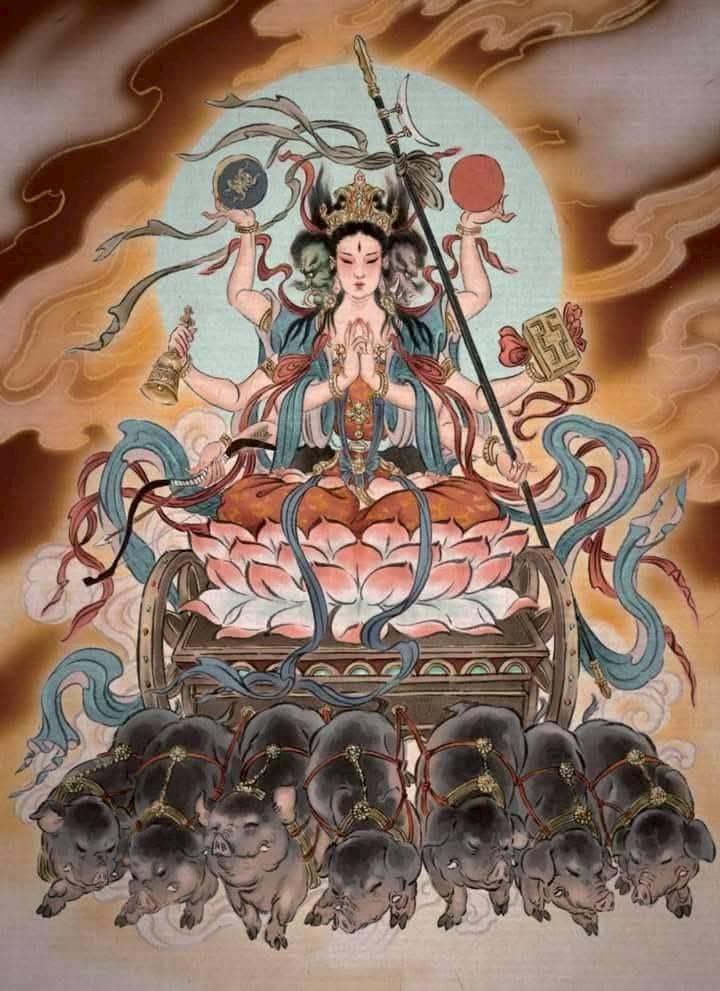
According to Buddhist teachings, Marici Bodhisattva is a protective deity who grants invisibility and averts disasters. This deity possesses immense power: she governs the thirty-six Heavenly Stars above, the seventy-two Earthly Fiends below, and the twenty-eight constellations, all of which are under her jurisdiction. The celestial sphere is divided into twelve palaces and twenty-eight constellations. The sun travels one day, one degree, completing one cycle in a year. The moon travels one day, thirteen degrees, completing one cycle in a month. Each month’s movement varies, governing human fortune and misfortune.
Regarding the relationship between Doumu Yuanjun and Marici Bodhisattva,
various schools of thought offer different accounts. We will briefly introduce it to you: For the Chinese, faith is an outward manifestation rooted in their inner nature. In the history of Chinese faith, Buddhism only began to flourish in the Tang Dynasty.
Later, until the Song Dynasty, when Taoism revered Doumu Yuanjun as its center of worship, Taoism and Buddhism became the best example of mutual integration.
In Buddhism, especially in Esoteric Buddhism, Marici Bodhisattva is a highly revered guardian deity. She is a Bodhisattva manifesting as a celestial maiden, said to be invisible to the naked eye. She rode in a cart pulled by seven or nine pigs, following the sun.
Therefore, it is generally believed that: “Doumu Yuanjun originated from the belief in Marici”; Taoism believes that: “Doumu Yuanjun is the yin manifestation of Yuanshi Tianzun himself, who transformed into Marici Bodhisattva in Western India.”; while Esoteric Buddhism believes that: “Marici Bodhisattva is a Buddhist bodhisattva from Western India, originally a deity practiced by Esoteric Buddhist practitioners!”
Two of the more famous ones are:
One is:
[Lishan Ciyuan Palace]
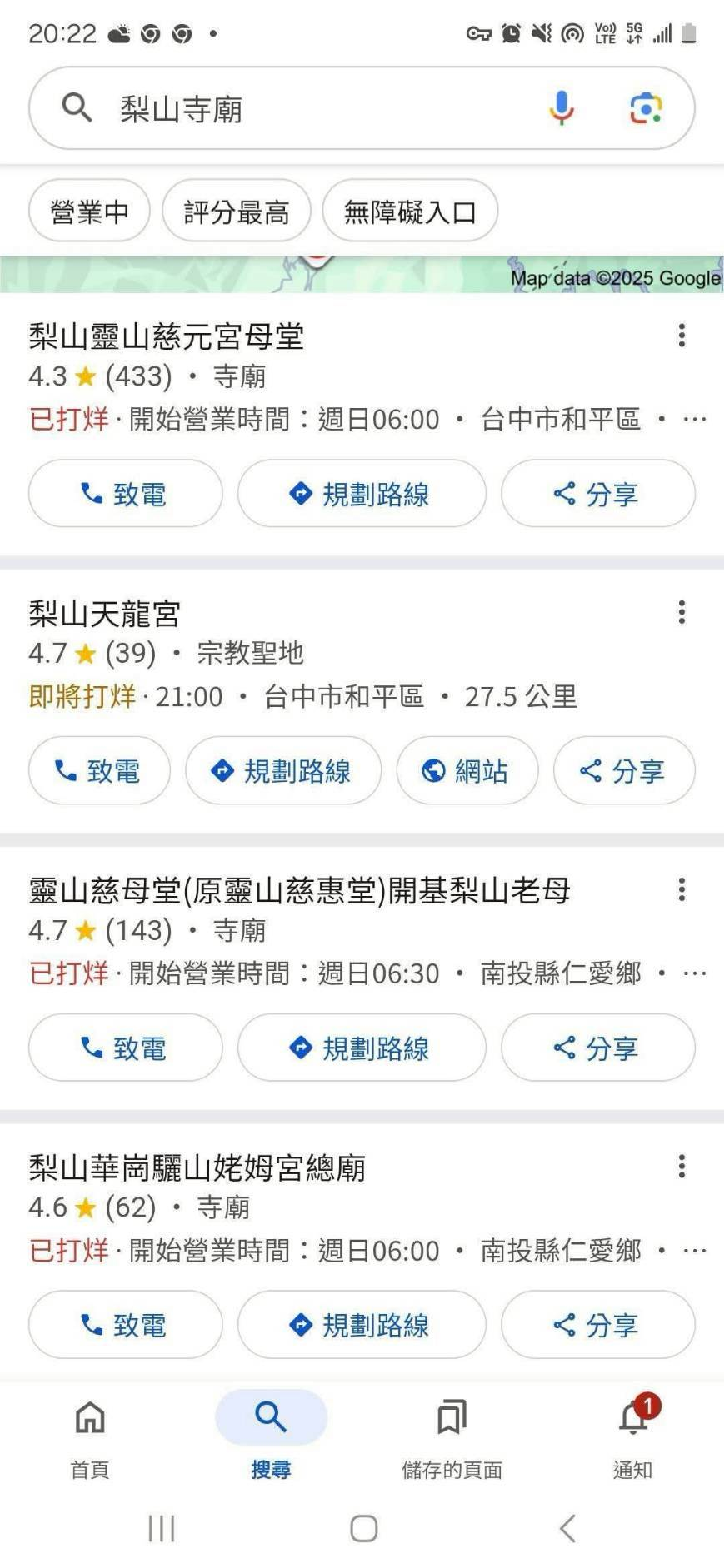
[a href=”https://share.google/gvahKZzhFBW]bN8Ptf” target=”_blank” rel=”noreferrer noopener”>Lishan Lingshan Ciyuan Palace Mother Hall
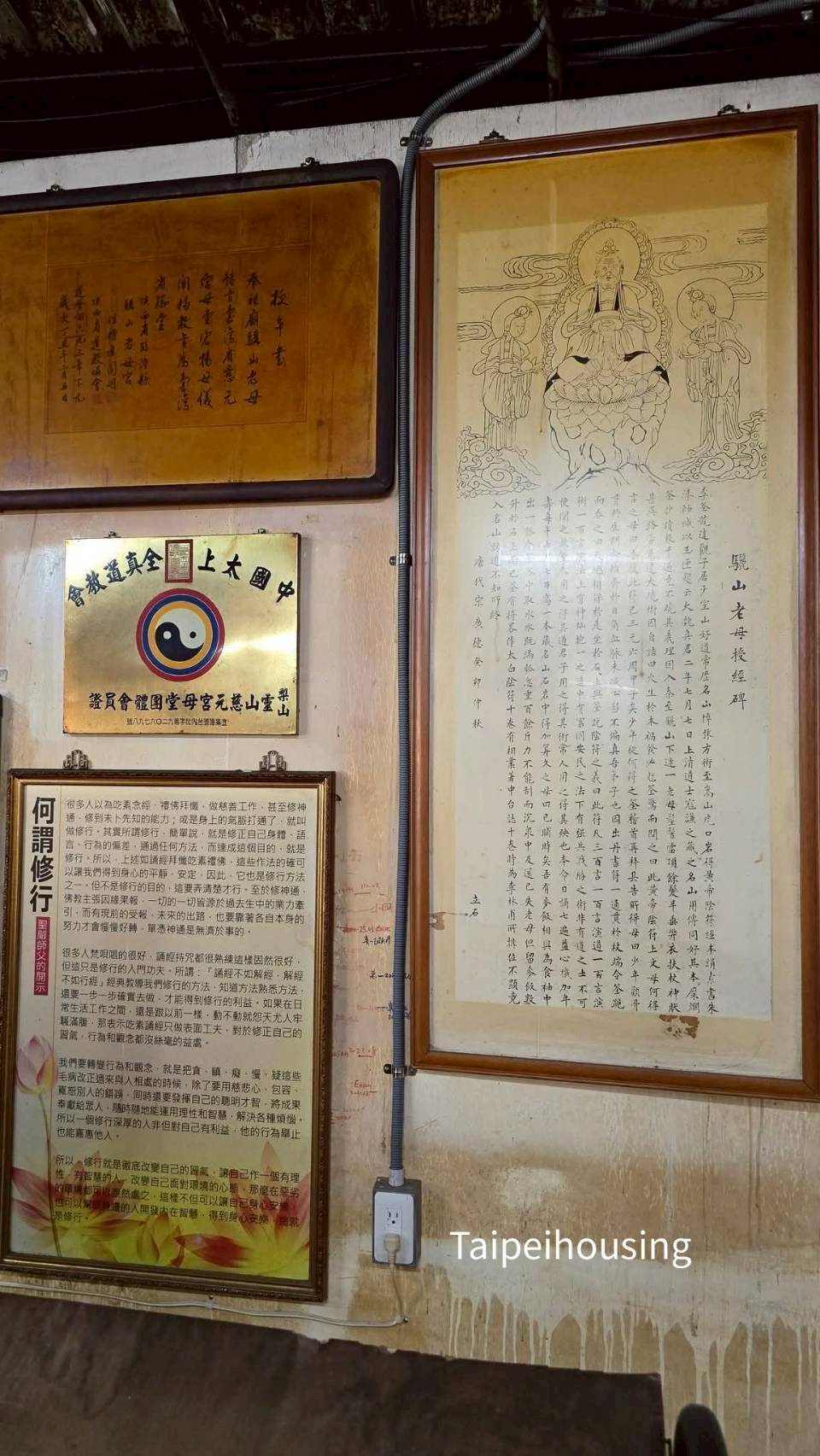
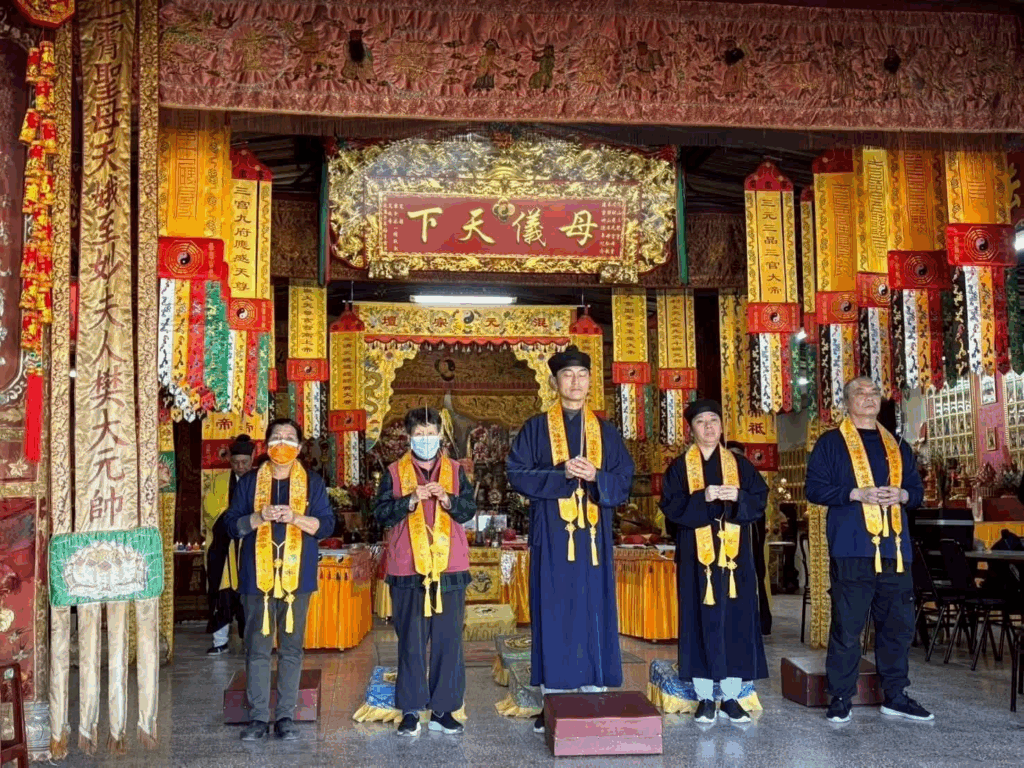
Ciyuan Palace was founded in 1988 (Republic of China Year 77). It was primarily initiated by Mr. Zhang Jinguo, a businessman and farmer from Lishan, who, by chance, met the Taoist Master Li Jinmu. He received the mandate from the Lishan Old Mother—the “Lingshan Yidao Ling”—to guide those with affinity, inspire those on the path to Penglai, and illuminate the three thousand worlds.
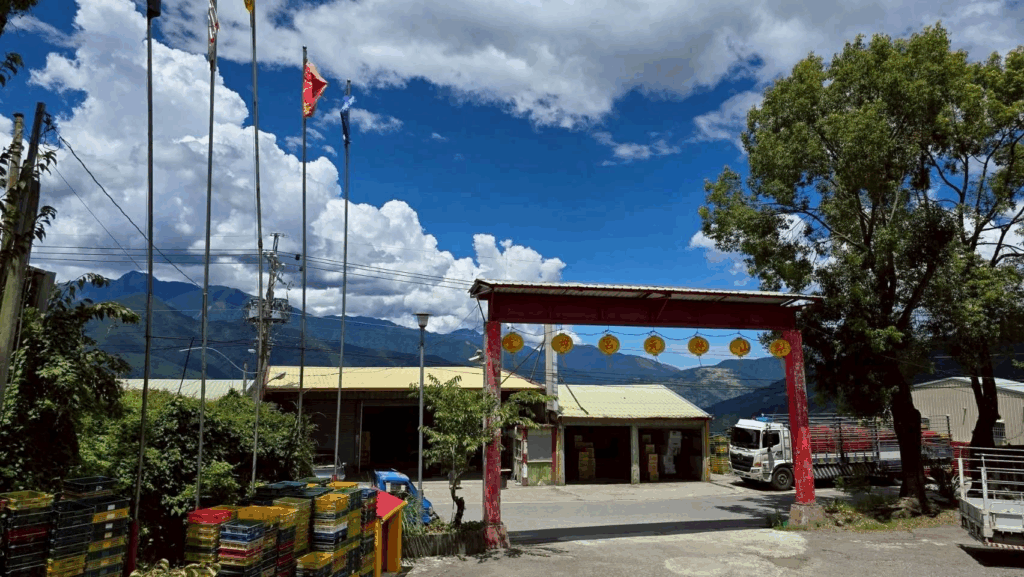
The main hall of Ciyuan Palace is a three-hall layout. Although it is constructed of sheet metal, the golden statue of “Lishan Laomu” enshrined in the main hall exudes a very kind and benevolent aura. It is also enshrined alongside other deities, including the “Eighteen Daoist Nuns.” The statue of a disciple riding a flying horse in front of the main hall represents Laomu’s beloved disciple. The “Fan Lihua” Grand Marshal, the main hall’s dragon-side side hall is dedicated to “Master Chunyang, Lu Xianzu” and enshrines many other Taoist deities. The tiger-side side of the main hall is the “Ksitigarbha Hall,” dedicated to “Ksitigarbha Bodhisattva,” and also enshrines “Guanyin Bodhisattva” and other deities; “Doumu Yuanjun” is enshrined on the right, and “Tai Sui Xingjun” is enshrined on the left front side. The “God of Wealth Hall” is located in the corridor leading from the main hall to the restaurant, enshrining the “Five Gods of Wealth.” Additionally, there is a “Thousand-Hand Guanyin Hall” accessible by steps next to the restaurant, dedicated to “Thousand-Hand and Thousand-Eyed Guanyin Bodhisattva” and other deities.
Another option is to proceed to Huagang Tianchi at a higher altitude.
Lingshan Cimu Temple (formerly Lingshan Cihui Temple) was founded by Lishan Laomu
Lingshan Cimu Temple: Altitude 2575 metersLingshan Cimu Temple, located on Huagang Hill in Ren’ai Township, Nantou County, is dedicated to Lishan Laomu, a supreme female immortal who, according to legend, resides deep within Lishan Mountain. Building a temple here is quite fitting; moreover, Lishan in China can also be considered Lishan, and Huagang is within the vicinity of Lishan in Taiwan.
These two Lishan Laomu Temples, while not as large as Alishan Zhen’an Temple, are the highest in terms of altitude.