

〈For Kyoto, the Buddhist Dharma does not reside in high places, but in this everyday communal practice.〉
[Kyoto’s Dual Hongan-ji Temples | The Transcendent Connection Between Kukai and Shinran]
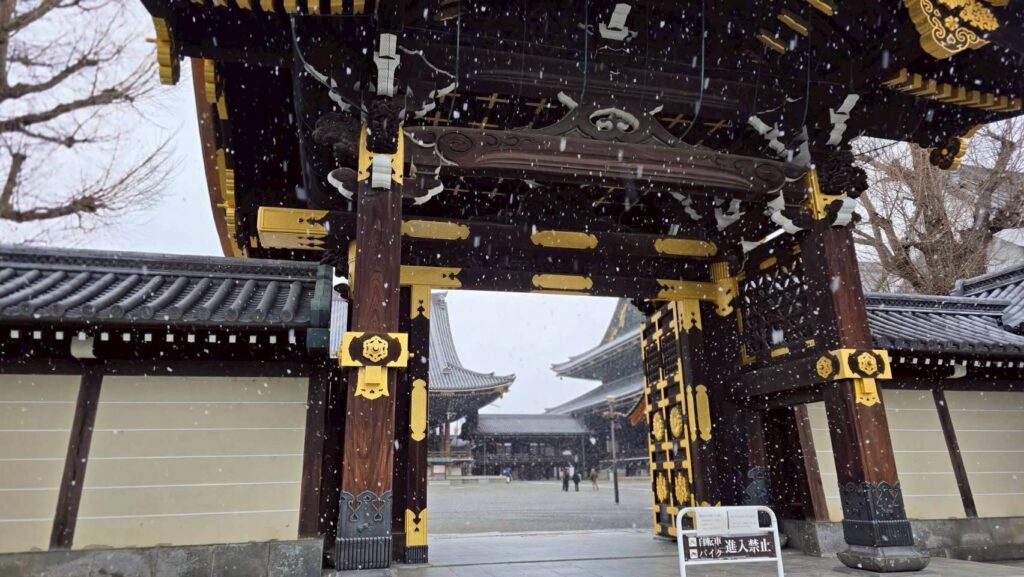
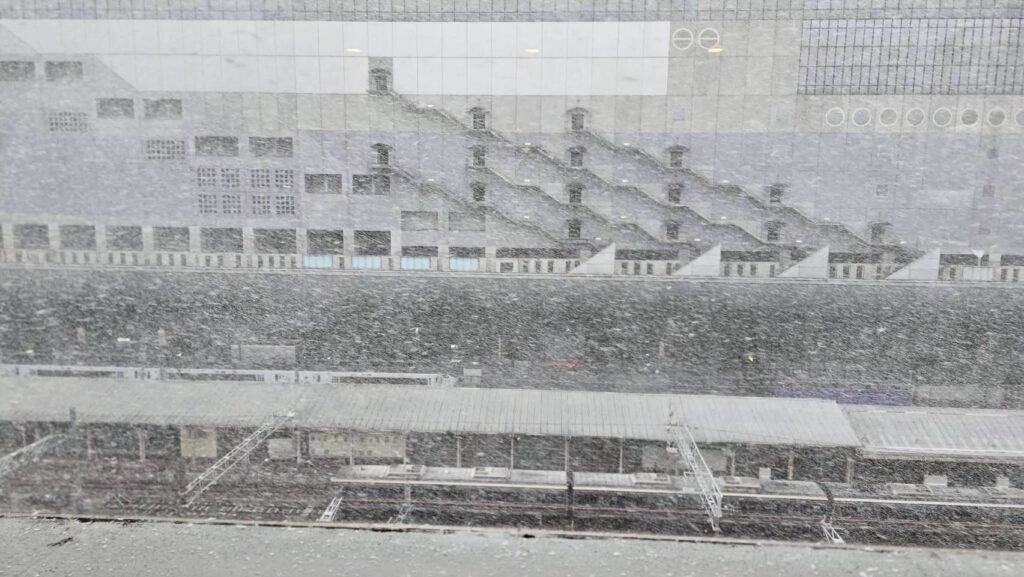
Strolling through the streets of Kyoto in the early morning, I encountered a once-in-a-decade heavy snow.
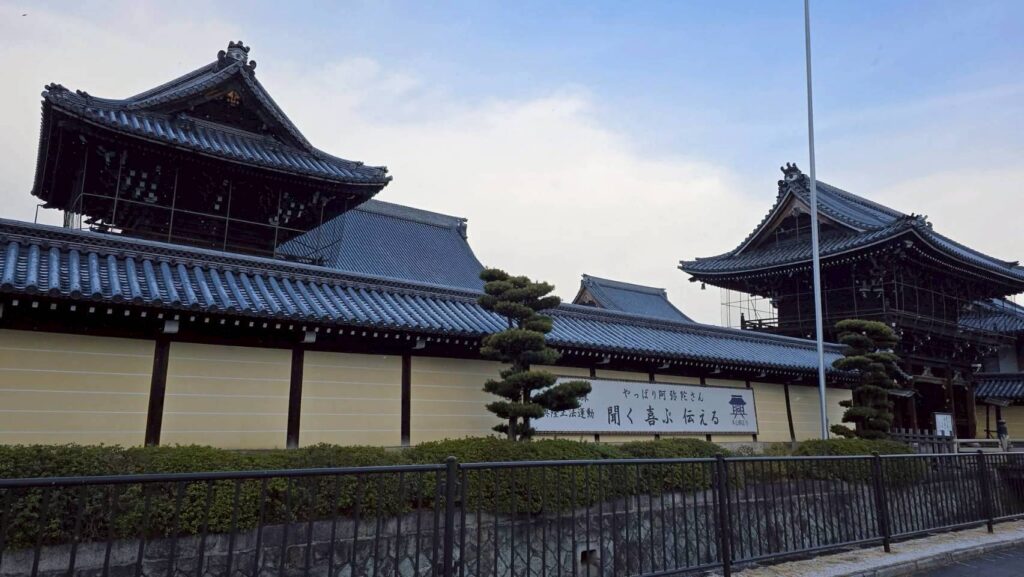
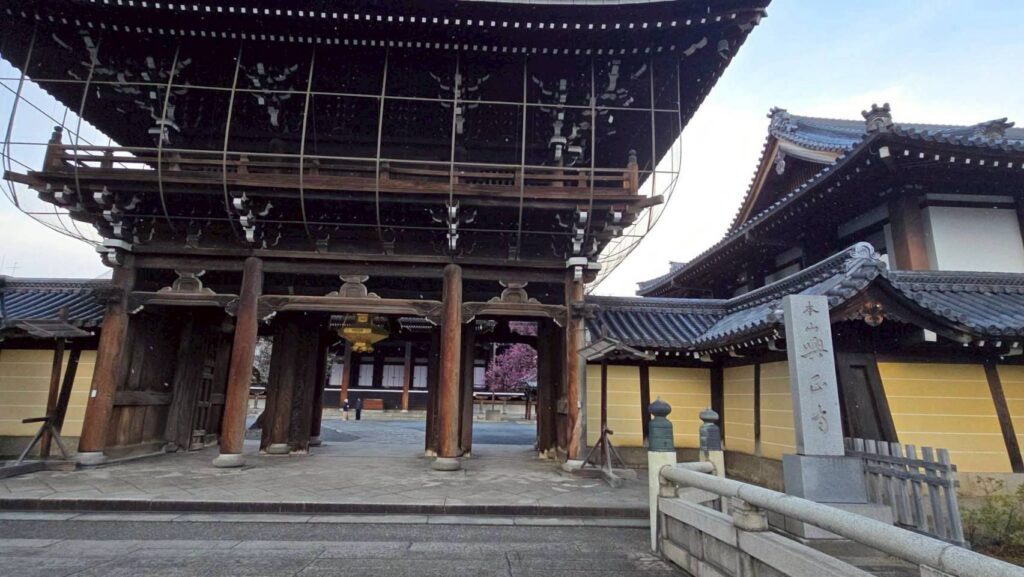
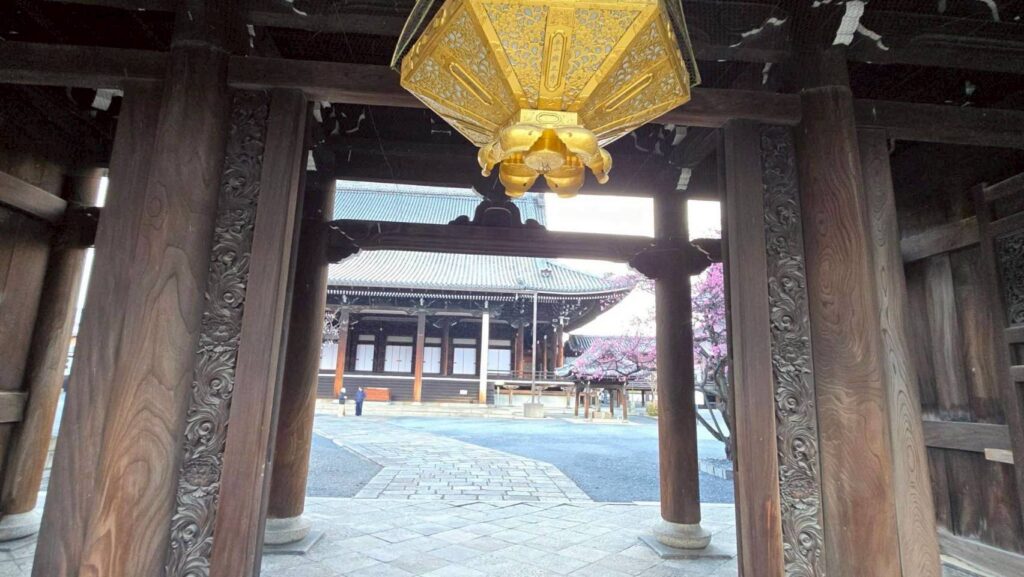
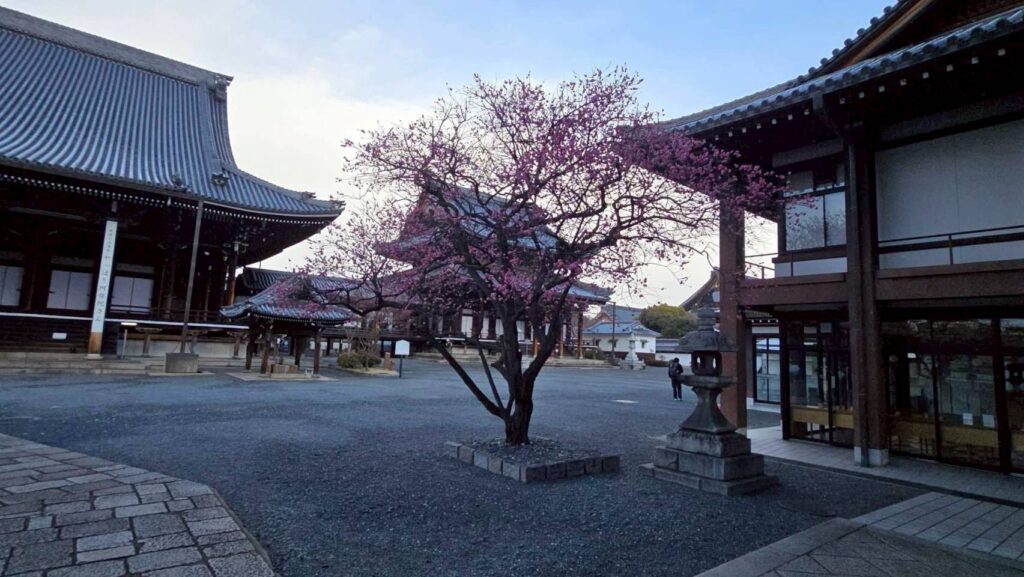
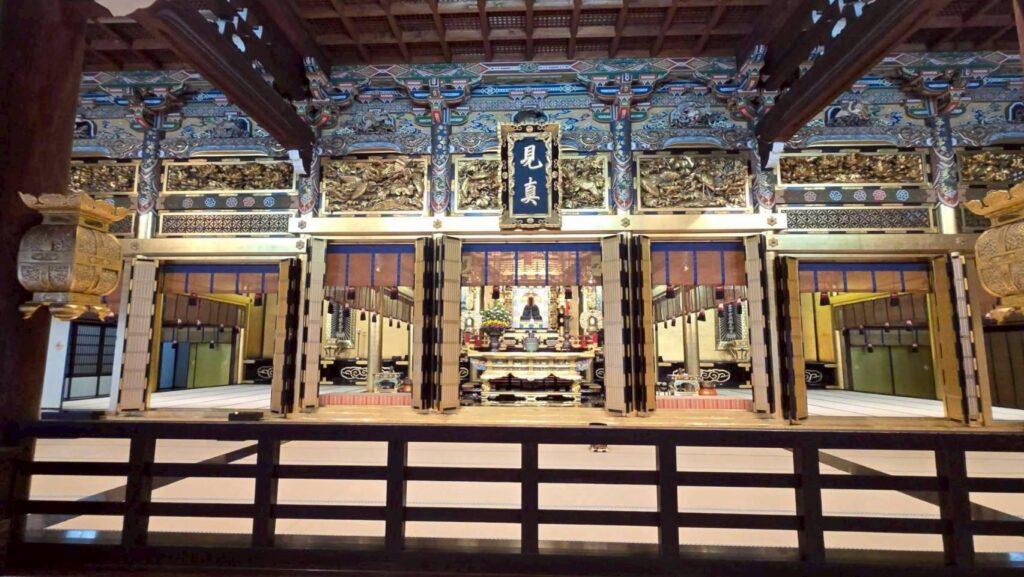
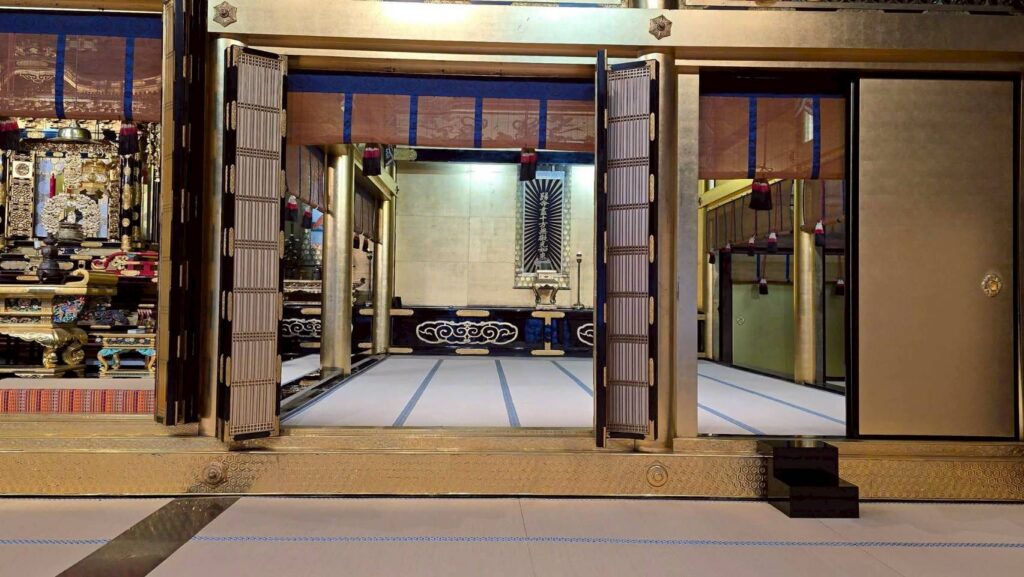
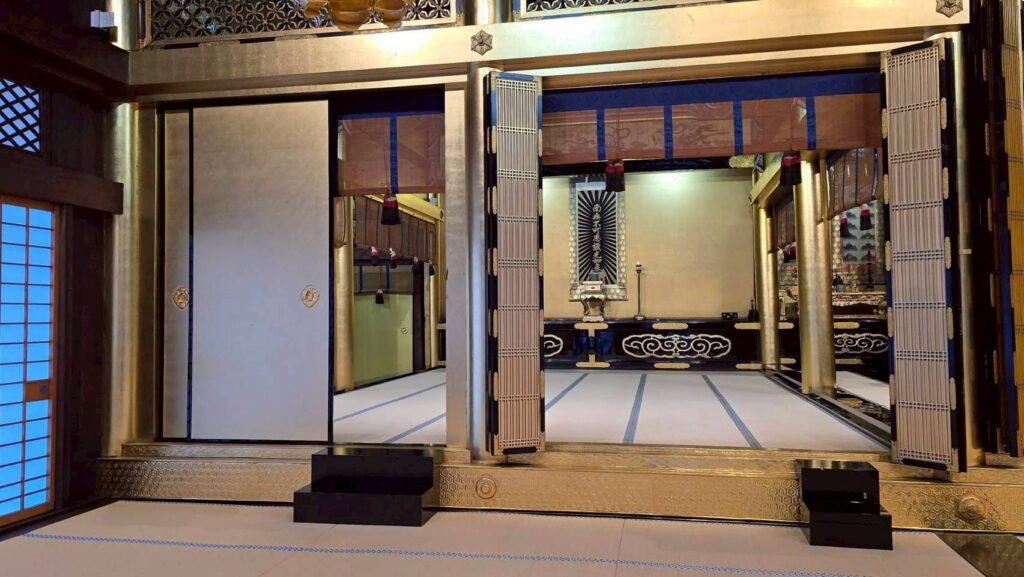
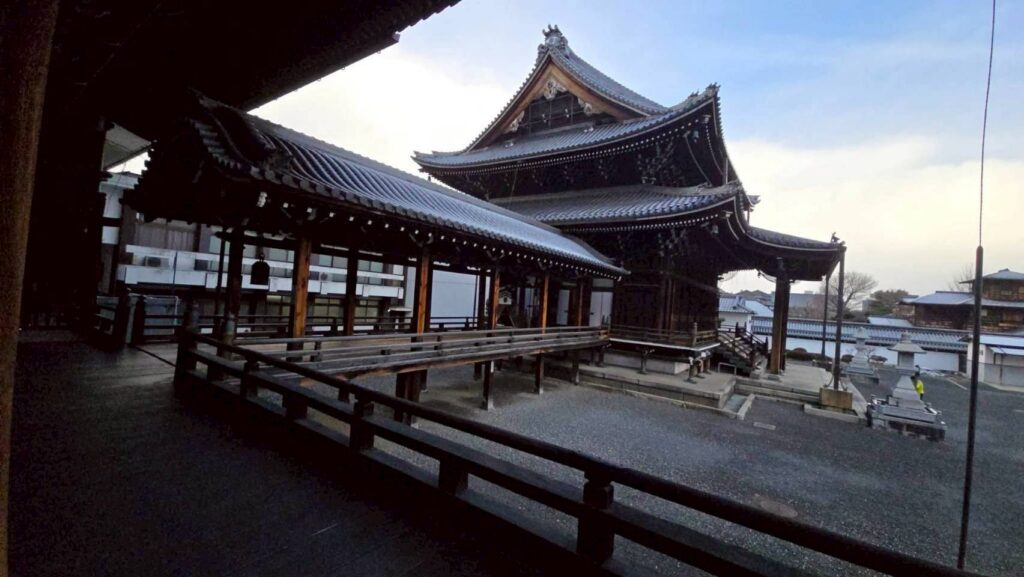
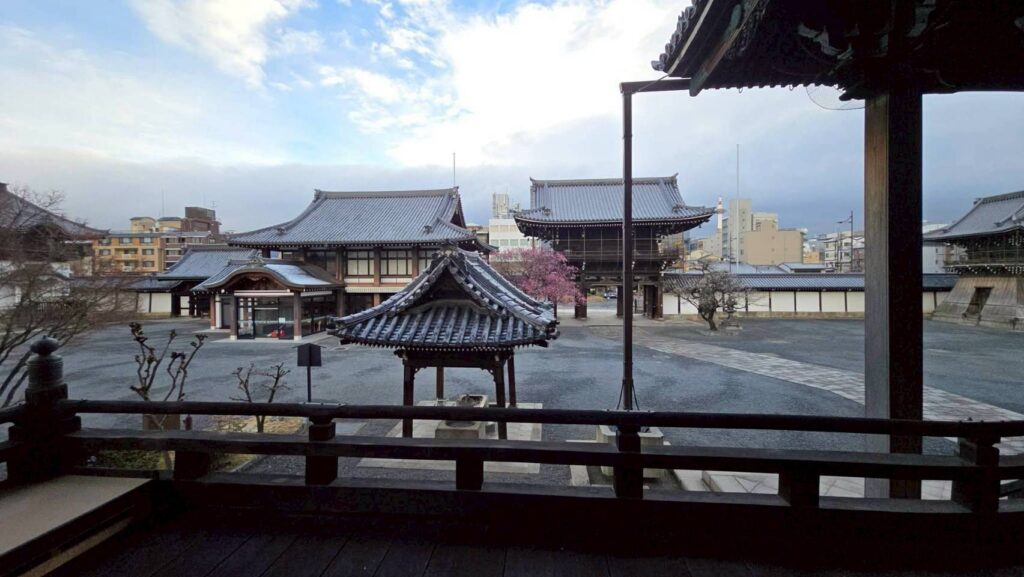
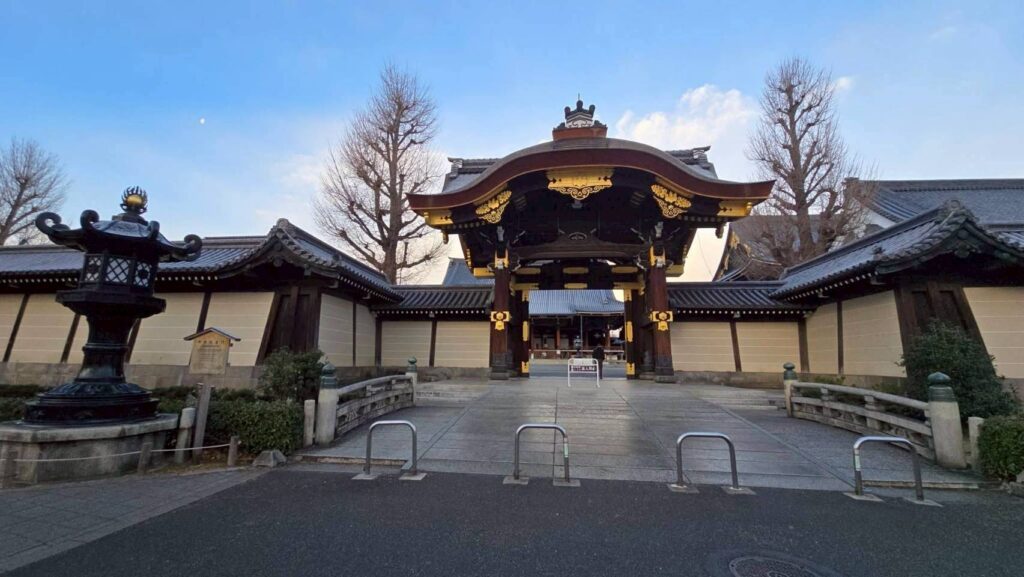
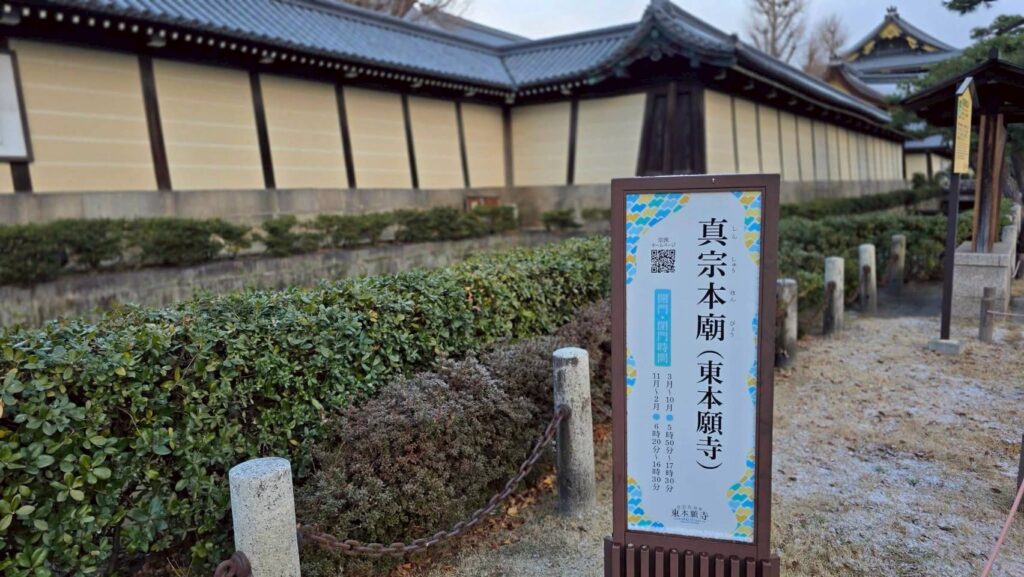
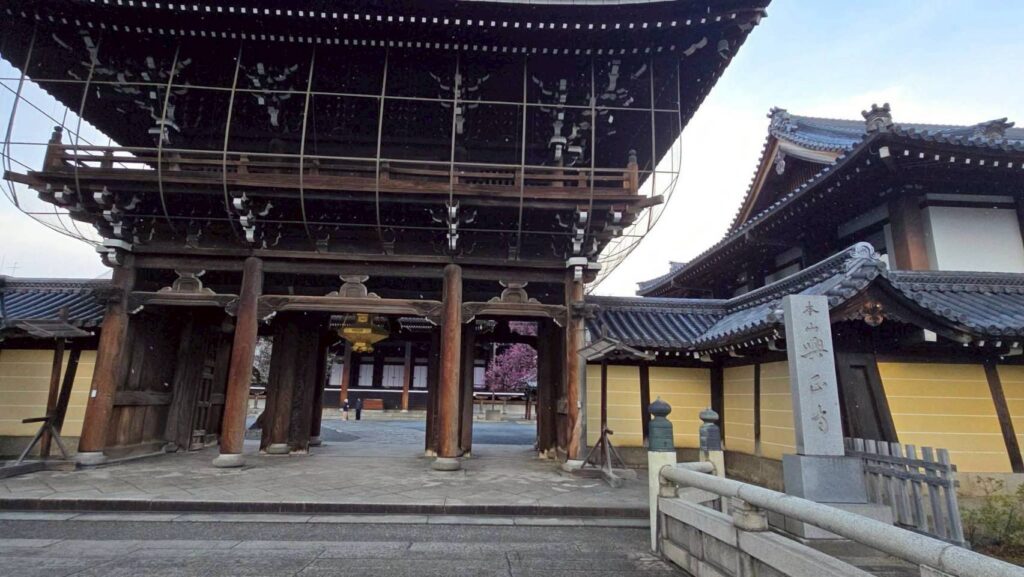
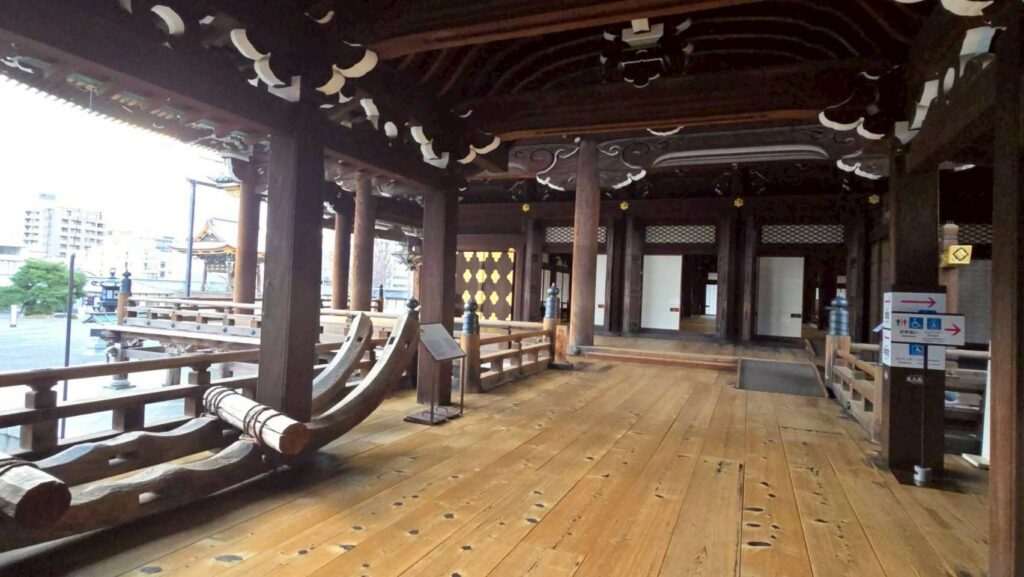
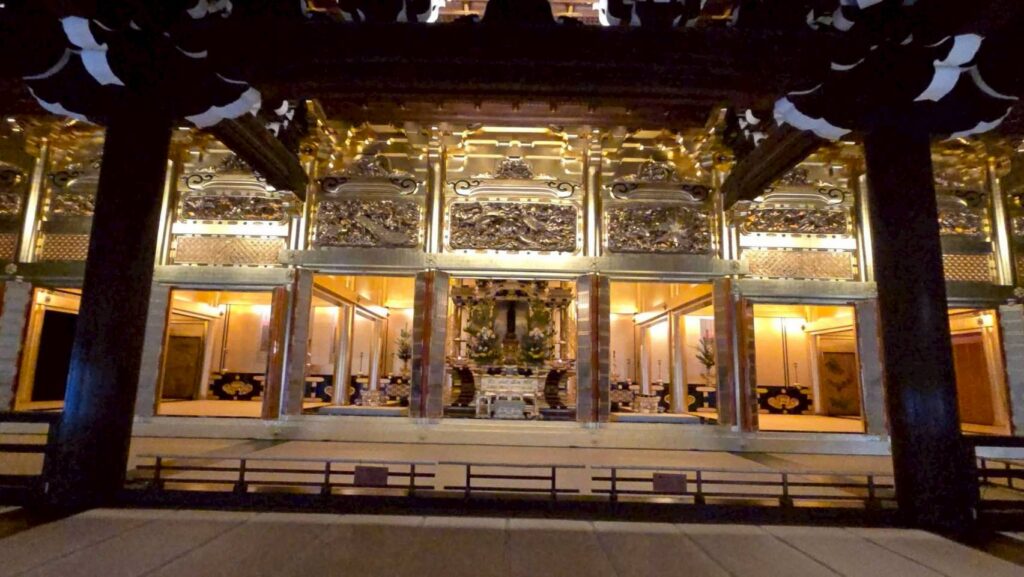
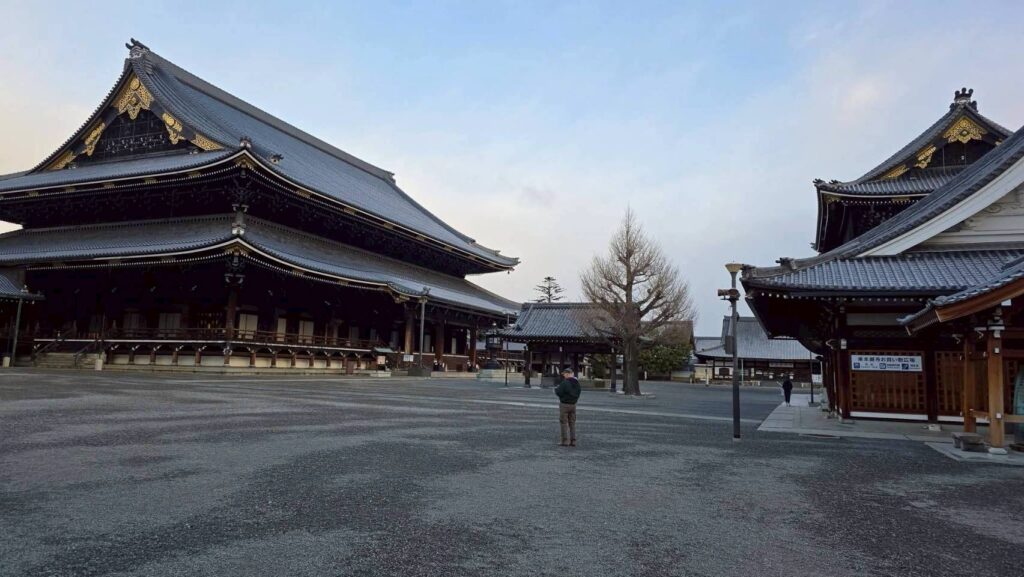
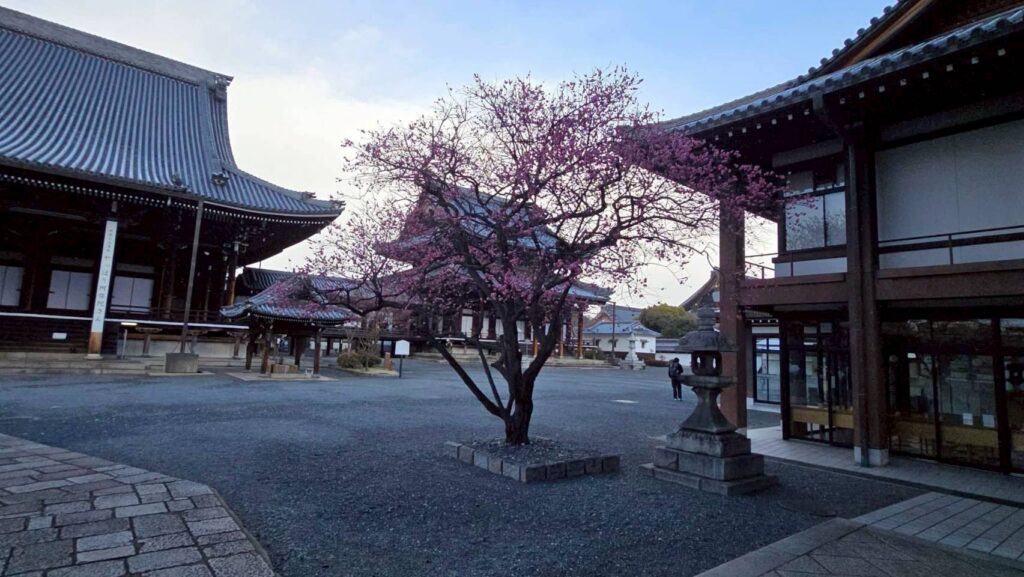
The first nine photos are of Higashi Hongan-ji, and the next nine are of Nishi Hongan-ji; the last two are of Higashi Hongan-ji when it started snowing. Both temples enshrine Amida Buddha as the principal image; the final photo shows the heavy snow at Kyoto Station.
I remember decades ago, I used to pass by Hongan-ji without going in.
But this time, I made a special visit, entering Higashi and Nishi Hongan-ji in the hazy twilight of half-awake, half-overcast weather.
Although they are very close to Kyoto Station, many travelers historically pass by without entering, even though no admission ticket is required.
These two massive temples, situated close to each other and sharing similar names, often confuse travelers. But if you savor them carefully, you will find they are Kyoto’s most interesting “twin” contrast—a 400-year dialogue about power struggles, historical lineage, and spatial aesthetics.
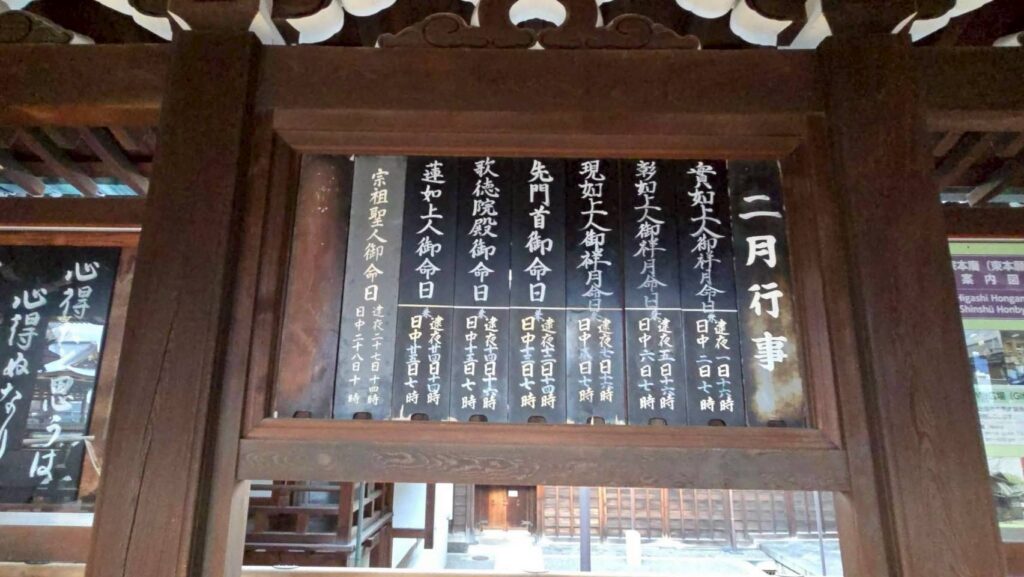
The Debate of Lineage: The Divergence of Bloodlines Under Political Power
This history of “East-West Division” originated from the political maneuvers of the early Tokugawa shogunate. Although both temples trace back to Shinran Shonin, the founder of Jodo Shinshu (True Pure Land Buddhism), their lineage backgrounds differ:
Nishi Hongan-ji (The Guardian of Cultural Heritage)
It inherited the original lineage and territory of Hongan-ji. It was deeply protected by Toyotomi Hideyoshi, so the space flows with the gorgeous, exquisite, and highly artistic legacy of the Momoyama period.
Higashi Hongan-ji (The Display of Will and Scale)
It was established by Tokugawa Ieyasu, who cleverly used internal succession disputes to weaken the sect’s power. Although it started later in history, it displays an astonishing “transmission of will” in its architectural scale. The “kizuna” (hair ropes) woven from the donated hair of followers during the reconstruction tell of the incredibly strong bond between this temple and the faith of the common people.
Spatial Aesthetics: The Architectural Experience of Breadth and Depth
Wandering through the snow, my most profound realization was the completely different “spatial strategies” of the two temples.
Higashi Hongan-ji: The Grandeur Expanding into “Breadth”
The space of Higashi Hongan-ji gives an absolute sense of power.
Visual Vector: Stepping into the temple, you are met with a vast gravel plaza of negative space.
Your gaze is drawn vertically to the massive “Goei-do” (Founder’s Hall), one of the largest wooden structures in the world. This sense of space expands outward and looks upward, showcasing the rigorous and grand aesthetic of order of the Edo period.
Nishi Hongan-ji: The Art Rooted in “Depth”
Nishi Hongan-ji presents a more restrained sense of layering.
Visual Vector: As a World Cultural Heritage site, its space invites inward exploration.
The architectural complex, including the national treasure “Karamon” gate, the Shoin (study), and the North Noh Stage, weaves into an exquisite labyrinth. The intricate carvings on the doors (Higurashi Gate) and the giant “inverted gingko” tree infuse the space with cultural depth. It doesn’t awe with sheer size, but intoxicates with details.
Connecting with Life: Converging in Morning Practice
Even though history divided them and space made them different,
I observed the common soul of both on that snowy morning: their connection with local life.
In the faint morning light, the main halls of both temples were filled with believers participating in the “Jinjo Gongo” (morning service).
The sound of chanting echoed in the massive wooden spaces, and the air was filled with solemnity.
For Kyoto, the Dharma is not in high places, but in this everyday communal practice.
Whether it’s the vast tatami mats of Higashi Hongan-ji or the deep corridors of Nishi Hongan-ji, they are not just historic sites or World Heritage properties; they are deeply connected to the local area.
Higashi Hongan-ji and Nishi Hongan-ji “do not belong” to Shingon Buddhism, nor are they a direct transmission from Kobo Daishi.
They belong to “Jodo Shinshu” (True Pure Land Buddhism), whose founder is Shinran Shonin.
Kobo Daishi (Kukai), on the other hand, founded “Shingon Buddhism,” whose headquarters is the previously mentioned “Toji Temple.”
Although they are not the same sect, in the temporal and spatial context of Kyoto, there is a very interesting “contrast in positioning” and “historical intertwining” between them:
1. Sect Positioning: Esoteric Buddhism vs. Pure Land
Kukai and Toji (Shingon Buddhism):
- Core: Esoteric Buddhism. Emphasizes “becoming a Buddha in this very body” through practices involving complex mandalas, mudras, and mantras (the Three Mysteries).
- Positioning: Belongs to the “Path of Difficult Practice.” During the Heian period, it was primarily the faith of the imperial family and aristocracy, carrying a sense of mystery and class.
Shinran and Hongan-ji (Jodo Shinshu):
- Core: Pure Land. Emphasizes “Other-Power,” believing that as long as one single-mindedly recites “Namu Amida Butsu,” they can be reborn in the Pure Land relying on the vow power of Amida Buddha.
- Positioning: Belongs to the “Path of Easy Practice.” Rising in the Kamakura period, it strongly emphasized “connecting with life” and became the core faith of the vast commoners and farmers.
2. The Geographical Interest of “Toji” and “Higashi Hongan-ji”
Around Kyoto Station, many people confuse these two, but they represent the zeitgeist of different eras in Kyoto:
- Toji in the South (Kukai): Represents the guardianship of “Heian-kyo,” the center of the esoteric universe, possessing the tallest five-story pagoda.
- Dual Hongan-ji in the North (Shinran): Represents the commoner power of “Early Modern Kyoto,” boasting the world’s largest wooden halls.
3. The Transcendent Connection Between Kukai and Shinran
Although Shinran lived about 400 years later than Kukai, there is an invisible bond in their transmission:
- Same Place of Study: Shinran Shonin initially practiced at Enryaku-ji on Mount Hiei, which is the mother mountain of Japanese Buddhism. Although Kukai pursued Esoteric Buddhism (Tomitsu) and Shinran pursued Pure Land, their initial nourishment both came from exploring Mahayana Buddhist doctrines.
- Care for “Sentient Beings”: Kukai established Japan’s first private school (Shugei Shuchi-in) to educate commoners; Shinran completely broke the boundary between monks and laity (advocating “neither monk nor layman”), allowing even the lowest-level workers to encounter the Dharma. This spirit of “connecting with life” is a continuous thread between them.
| Around the Station | Temple Name | Sect | Founder | Core Positioning |
|---|---|---|---|---|
| South of Kyoto Station | Toji Temple | Shingon | Kukai | Esoteric Mandala, National Protection, Buddhahood in this body |
| North of Kyoto Station | Higashi & Nishi Hongan-ji | Jodo Shinshu | Shinran | Pure Land Faith, Commoner Practice, Other-Power |
“Although these two magnificent buildings belong to a different sect than the Toji Temple to the south (Kobo Daishi’s Shingon Esotericism), together they form the faith map of Kyoto. If Toji represents the mystery and height of the universe, then the Dual Hongan-ji temples display the breadth and warmth of the Pure Land faith. Both tightly connect with the lives of the people on this land through different sounds in the quiet of the early morning.”
👣 Practice in Steps: The “Gateway of Faith” from Kyoto Station
If you are staying near Kyoto Station, these three giant temples witnessing the history of Japanese Buddhism are actually right around the corner. Walking is the best way to feel this “division and unity in the snow.”
- Heading North: Seeking the commoner warmth of Shinran (Higashi and Nishi Hongan-ji)
- Higashi Hongan-ji: Exit from the “Karasuma Central Exit” of Kyoto Station and walk straight north along Karasuma-dori for about 7 minutes to reach that awe-inspiring Karasuma Gate. On a snowy day, the sound of footsteps on the gravel feels exceptionally crisp and quiet.
- Nishi Hongan-ji: Walk west from Higashi Hongan-ji for about 10-15 minutes (via Horikawa-dori) to enter this World Cultural Heritage site. Between the two temples are many old shops selling Buddhist altar fittings and incense, which is Kyoto’s most everyday religious industry landscape.
- Heading South: Looking up at Kukai’s esoteric universe (Toji)
Walking about 15 minutes southwest from the “Hachijo Exit” of the station, you can see Japan’s tallest wooden five-story pagoda.
The “Dual Hongan-ji” north of Kyoto Station and the “Toji Temple” to the south just happen to form a triangle of faith across time and space. It is recommended to visit between 6:00 and 7:00 in the early morning, when the “Jinjo Gongo” (morning service) is taking place.
Even amidst the heavy snow, stepping into the Goei-do of Higashi Hongan-ji, standing on the giant tatami mats, and feeling the white breath exhaled by believers interweaving with the sound of chanting,
The greatness of Kyoto lies not in the grandeur of its architecture, but in the fact that even after 400 years, this place remains a spiritual refuge for people’s lives.