


[Yakushi and Maitreya]
[Tying the lifelines of the Buddhist Dharma from China’s Tang Dynasty to Japan’s Nara tightly together]
[From Sun Moon Lake to Nishinokyo, the lineage of Xuanzang Sanzang shines like the lapis lazuli light of Yakushi Buddha]
[Nara Yakushi-ji is the beginning of the Yakushi faith in Japan]
[The perfect harmony of exoteric and esoteric Buddhism between Yakushi-ji and Shin-Yakushi-ji]
[As physical evidence of the eastward spread of Buddhist culture, Nara Yakushi-ji holds the status of “Head Temple of the Hosso Sect”]
[From Sun Moon Lake to Nishinokyo, the lineage of Xuanzang Sanzang shines like the lapis lazuli light of Yakushi Buddha]
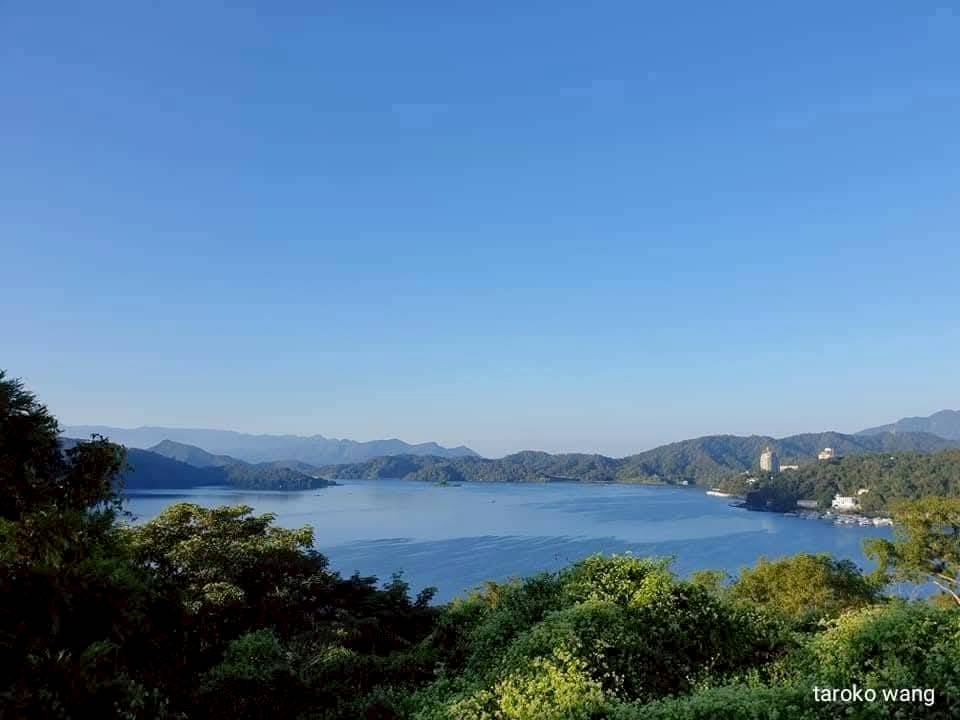
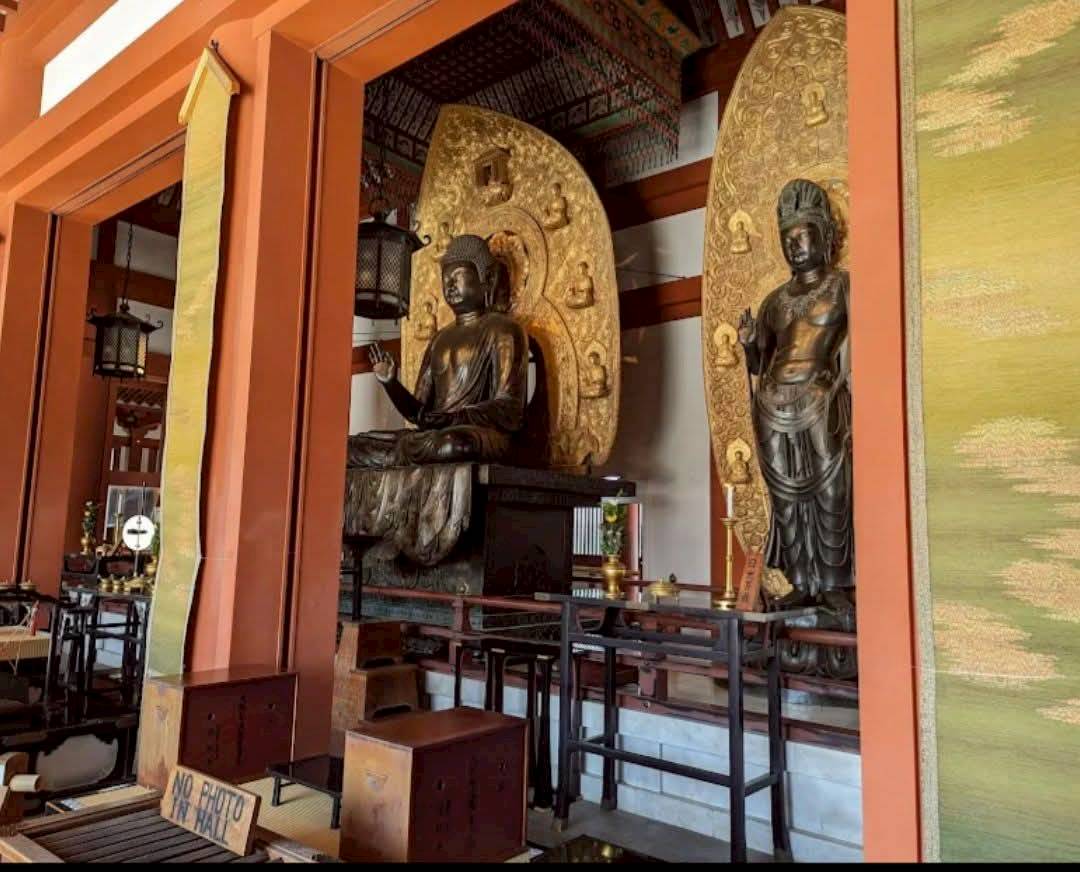
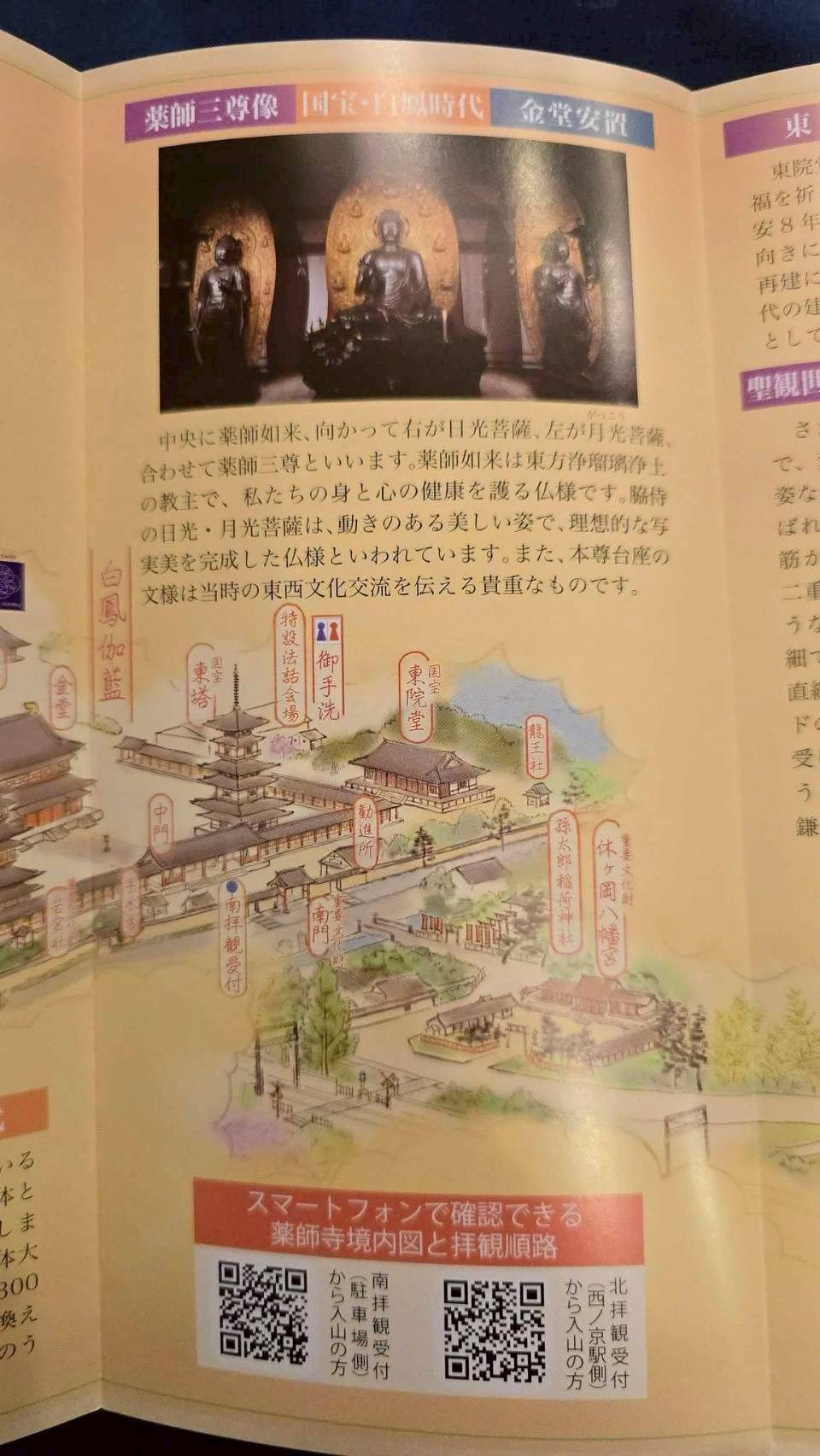
The image of the Yakushi Triad in the Kondo is from the Internet
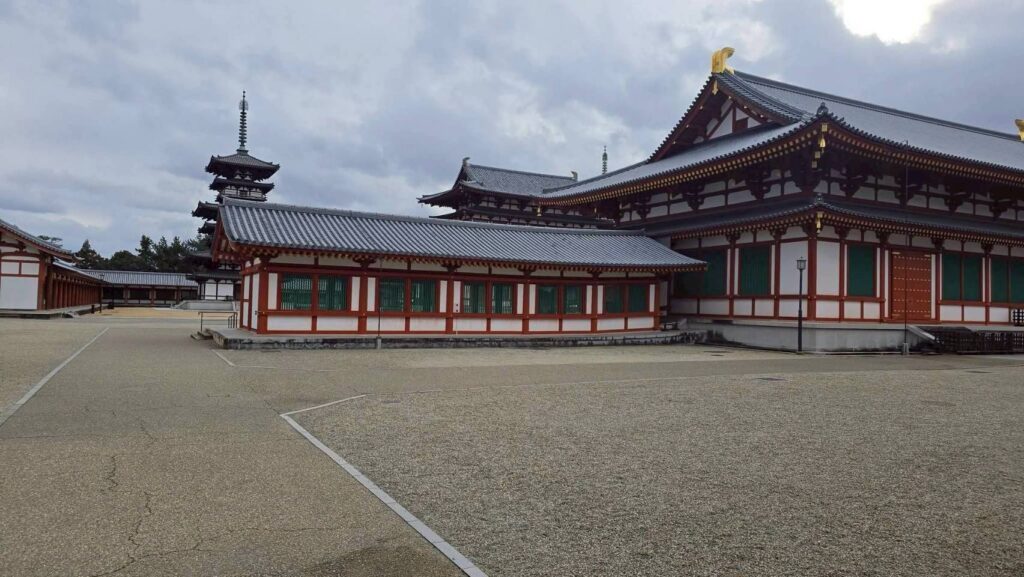
Building details:
https://blog.udn.com/mobile/kocj/177434384
Part 1 Sharing:
https://www.facebook.com/share/p/1SUg7ahBmN/
Lapis Lazuli Pure Land and Yogacara Lineage: The Millennium Validation of Nara’s Dual Yakushi Temples
1. Guardian of Xuanzang’s Lineage: Yakushi-ji, the Head Temple of the Hosso Sect
Why does the Daigando (Great Lecture Hall) in Nara’s Yakushi-ji enshrine Maitreya Bodhisattva?
[Yogacarabhumi-Sastra] Because everything is of the mind and all dharmas are of consciousness, and the scale of the Daigando is grander than the Kondo.
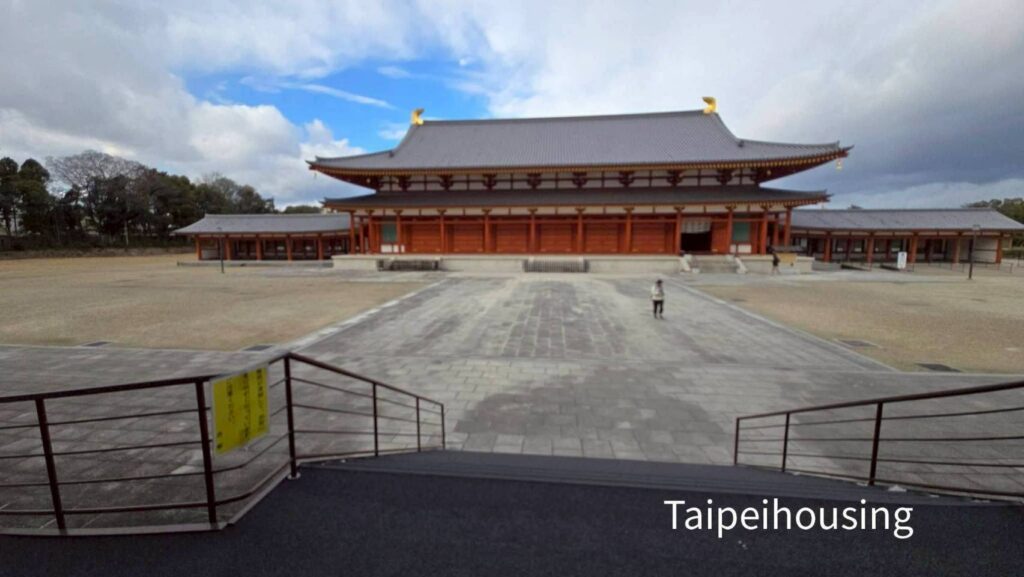
The temple layout (Garan layout) of Nara Yakushi-ji is highly orderly, reflecting the understanding of universal order by the Hosso Sect’s “Consciousness-Only” philosophy. Its buildings are not just artworks; each hall corresponds to specific Buddhas or Bodhisattvas and their Dharma meanings.
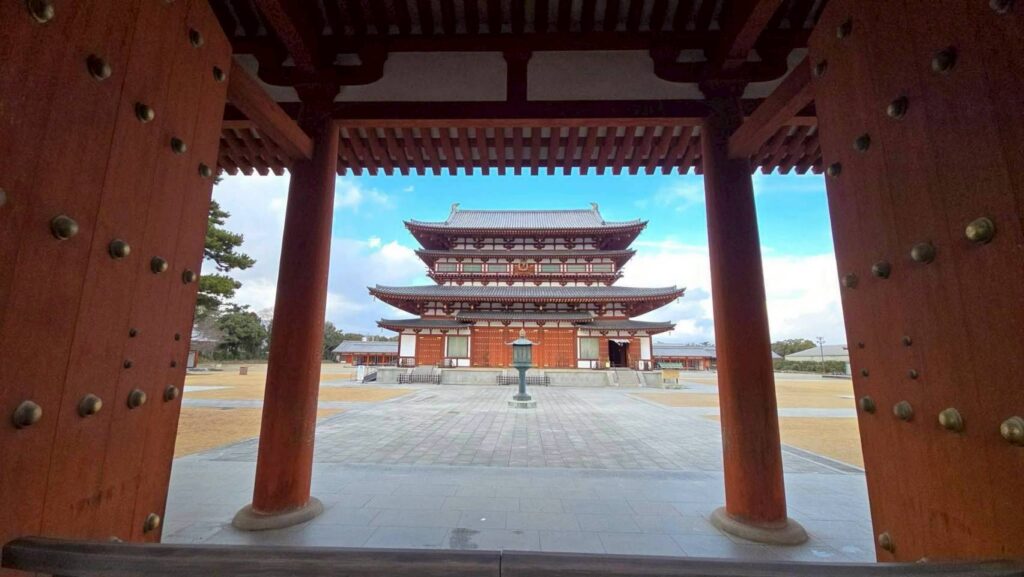
- Kondo (Main Hall): The Core of the Yakushi Teachings
The Kondo is the heart of the entire temple, representing the Pure Land of Yakushi Nyorai (Bhaisajyaguru).- Principal Deities: Yakushi Triad (National Treasure)
- Central Deity: Yakushi Nyorai. Yakushi Nyorai sits in the lotus position. The most unique feature of this Buddha statue is that its “majesty-declaring” pedestal is carved with motifs from Greek, Persian, Indian, and Chinese civilizations, symbolizing that the Yakushi teachings offer worldly salvation.
- Attendants: Nikko Bosatsu (Sunlight Bodhisattva, on the right) and Gakko Bosatsu (Moonlight Bodhisattva, on the left). These two Bodhisattvas display extremely elegant waist curves (the tribhanga pose), symbolizing uninterrupted protection day and night.
- Analysis: The Kondo presents the highest realm of “exoteric Buddhism,” emphasizing the Twelve Great Vows of Yakushi Buddha and relief from sickness and suffering.
- Daigando (Great Lecture Hall): The Place for Doctrinal Research and Transmission
Grander in scale than the Kondo, the Daigando is the place where monks study the “Yogacara” doctrines and hold debate assemblies.- Principal Deities: Maitreya Triad
- Central Deity: Maitreya Nyorai. In the Hosso Sect (Yogacara school), Maitreya Bodhisattva holds supreme status because he is the originator of the Yogacara study. Master Xuanzang’s journey to the West to seek the Dharma was ultimately to obtain Maitreya Bodhisattva’s “Yogacarabhumi-Sastra”.
- On both sides: Ho-onrin Bosatsu and Daimyoso Bosatsu.
- Other Enshrinements: A giant Buddha’s Footprint stone (Bussokuseki) is also enshrined within the hall.
- Analysis: This represents the “academic lineage” of the Hosso Sect, emphasizing the transformation of consciousness into wisdom through intellect and contemplation.
- Genjo-sanzo-in (Xuanzang Sanzang Courtyard): The Source of the Lineage
An independent courtyard located on the north side, it is the most representative sectarian symbol of Yakushi-ji.- Xuanzang Pagoda: Enshrines the parietal bone relic of Master Xuanzang Sanzang.
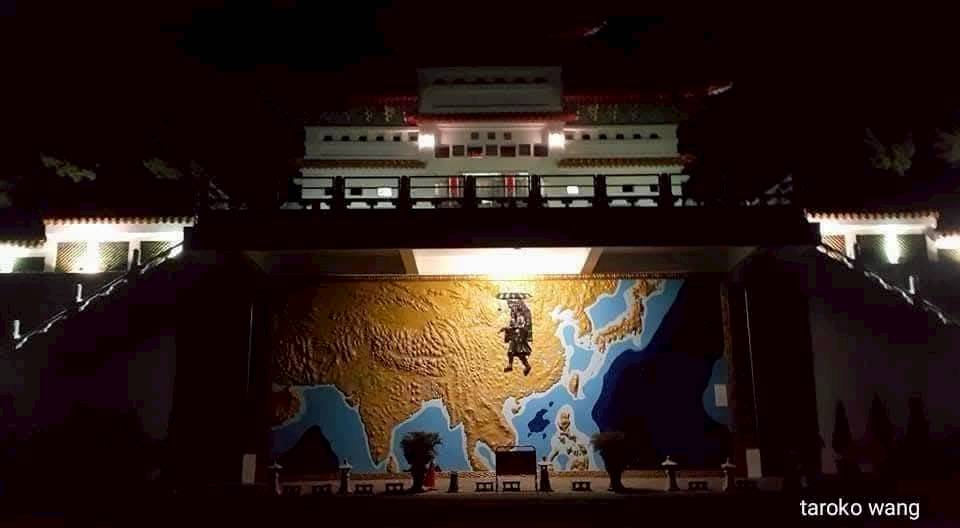
- Great Tang Western Regions Mural Hall: Houses a statue of Master Xuanzang and features magnificent murals created by Japanese painter Ikuo Hirayama, recording the master’s journey to obtain the scriptures.
- Analysis: This represents the “transmission of the lineage,” tightly connecting the lifelines of the Buddhist Dharma from China’s Tang Dynasty to Japan’s Nara.
- East Pagoda (Toto) and West Pagoda (Saito): The Power of Protection
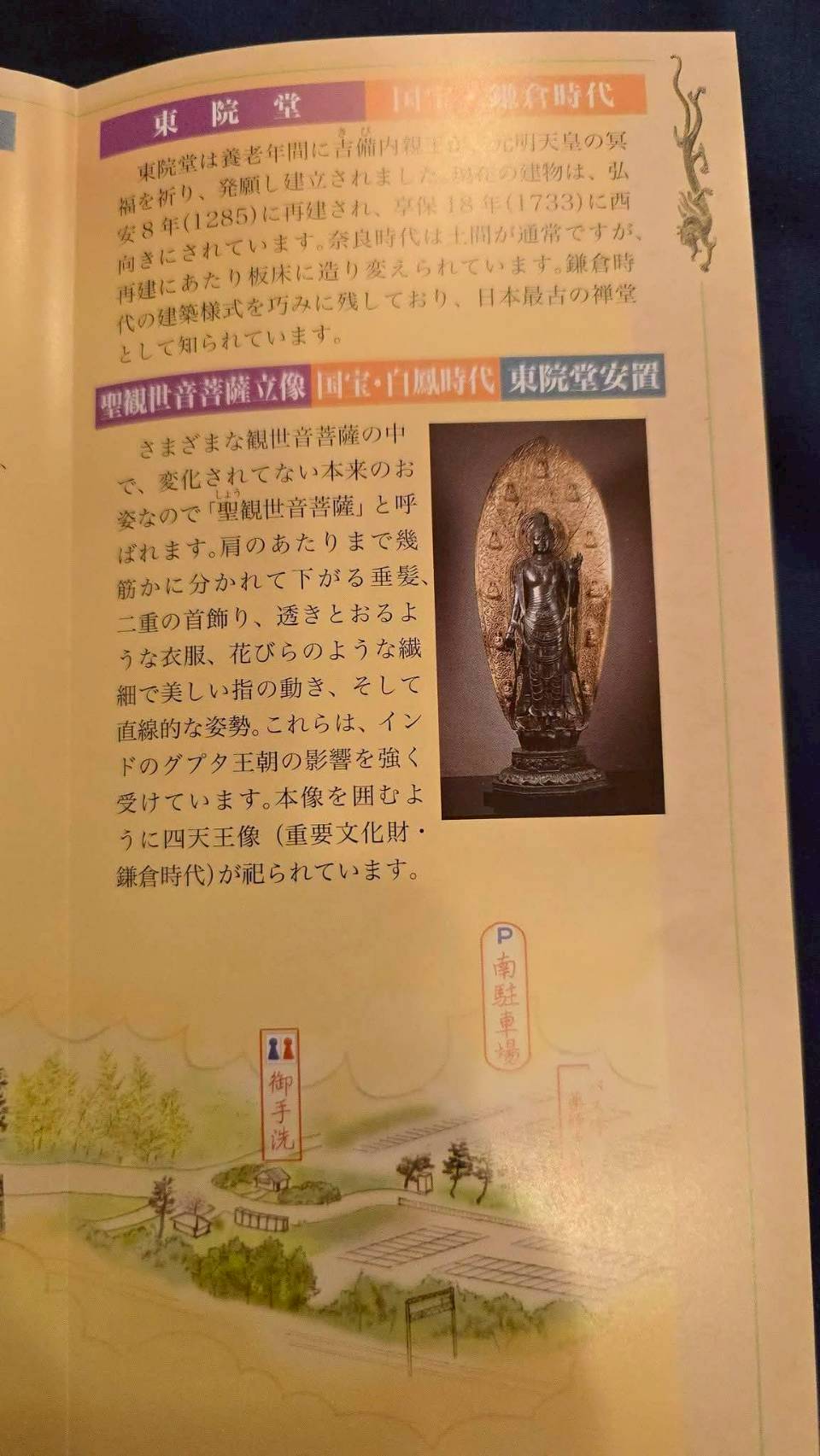
These two pagodas are the backbone of the temple.- East Pagoda (National Treasure): The interior enshrines the Eight Scenes of Shakyamuni’s Life (depicting scenes after the Buddha’s Parinirvana).
- West Pagoda: The interior enshrines the Eight Scenes of Shakyamuni’s Life (depicting scenes after the Buddha’s enlightenment).
- Analysis: The twin pagodas standing together symbolize the “dual practice of compassion and wisdom.” The East Pagoda represents ancient tradition, while the West Pagoda represents newly born vow power (the West Pagoda was rebuilt in 1981).
- Toindo (East Hall): A Tranquil Space for Prayer
Located east of the Kondo, this is a hall with a softer style.- Principal Deity: Sho Kannon Bosatsu (National Treasure). This statue is considered one of the most beautiful Kannon statues in Japan, showing the influence of India’s Gupta Empire art on Japan. Its tranquil expression can soothe the restlessness of sentient beings.
- Analysis: Toindo provides a more “meditative” space, suitable for personal spiritual healing.
- Jikido (Dining Hall): Practice in Daily Life
- Principal Deities: Amida Triad.
- Analysis: Reconstructed in 2017, the interior walls are painted with massive murals showing the history of the spread of Buddhism from India to Japan.
Summary Analysis Table
| Hall | Mainly Enshrined Buddhas and Bodhisattvas | Symbols of Dharma |
|---|---|---|
| Golden Hall | Medicine Buddha Triad | Compassionate Salvation, Healing of Body and Mind |
| Grand Lecture Hall | Maitreya Triad | Yogacara School, Wisdom Transmission |
| Xuanzang Tripitaka Academy | Master Xuanzang | Source of the Dharma Lineage, Spirit of Seeking the Dharma |
| East Courtyard Hall | Holy Avalokitesvara Bodhisattva | Compassionate Protection, Peace of Mind |
| East and West Twin Pagodas | Eight Aspects of Shakyamuni Buddha | The Life and Deeds of the Buddha, the Union of Compassion and Wisdom |
The hall arrangement at Yakushi-ji, from the core Yakushi Buddha to the lineage source Master Xuanzang, and then to the future Maitreya Buddha, forms a complete temporal and spatial system of past, present, and future.
This is exactly the architectural reason why Yakushi-ji holds the “Head Temple” status in the Hosso Sect.
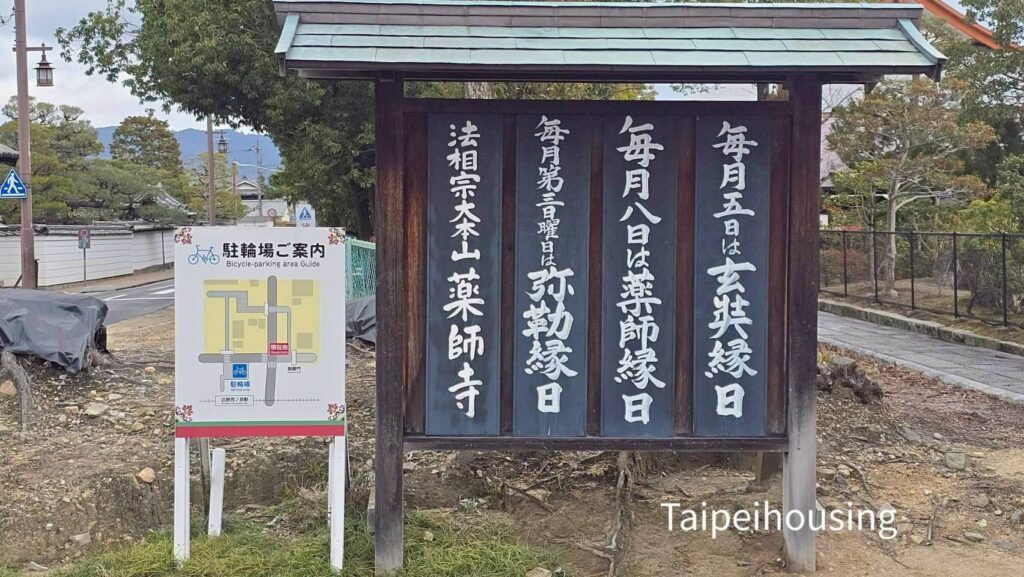
Lapis Lazuli Pure Land and Yogacara Lineage
In the map of global Buddhism, Nara Yakushi-ji has an irreplaceable uniqueness—it is the head temple of Japan’s “Hosso Sect”. The Hosso Sect originated from Master Xuanzang in the Tang Dynasty, emphasizing that “all dharmas are consciousness only.” Yakushi-ji not only completely preserves this doctrinal bloodline from the Great Tang, but its grounds also house the “Genjo-sanzo-in” to enshrine the parietal bone relic of Master Sanzang.
This lineage endows Yakushi-ji with a unique soul: All external sickness, suffering, and disasters are manifestations of the seeds of consciousness of sentient beings.
Therefore, the establishment and existence of Yakushi-ji are not just for praying for the “phenomenon” of health, but more so to implement the Yogacara practice of “transforming consciousness into wisdom.”
1. Architecture and Heritage: The Beginning of Japanese Yakushi Faith
- The Oldest Extant Wooden Yakushi Architecture: Yakushi-ji was founded in 680 AD (Tenmu Emperor period), with its East Pagoda built in 730 AD. Among wooden architectures worldwide specifically dedicated to Yakushi Buddha, this National Treasure witnessing the peak of Hakuho culture is an extremely rare original physical evidence preserved for 1,300 years globally.
- World Heritage and Eastward Spread of Culture: As part of the “Historic Monuments of Ancient Nara,” Yakushi-ji is listed as a World Cultural Heritage site. The grape arabesque patterns and Four Symbols motifs carved on the base of the Yakushi Triad are historical ironclad proofs of ancient Silk Road culture arriving in Japan via China.
- Japan’s No. 1 Sacred Site: As the first stop of Japan’s “Saigoku 49 Yakushi Pilgrimage,” Yakushi-ji established the official temple status of the Japanese Yakushi faith, becoming the most important site where East Asian Buddhist culture spread eastward and blossomed.
2. Perfect Harmony of Exoteric and Esoteric: The Lineage Complementarity of Yakushi-ji and Shin-Yakushi-ji
Yakushi-ji (Main Temple) and Shin-Yakushi-ji (built in 747 AD) stand in the east and west, respectively, forming a complete teaching of exoteric and esoteric harmony:
- Yakushi-ji (Principle and Exoteric): Represents the doctrinal orthodoxy and vast vow power of the Hosso Sect. Through its grand temple layout (Yakushi-ji style layout) and the Xuanzang lineage, it manifests the majesty and breadth of vow power of the Yakushi Buddha-land.
- Shin-Yakushi-ji (Practice and Esoteric): The “Shin” (New) in its name means “miraculous.” It uses a rustic Nara-period dining hall building as its main hall. Inside, the principal deity is surrounded by clay statues of the “Twelve Heavenly Generals,” displaying the depth and esoteric space of guarding the Alaya-vijnana (storehouse consciousness) and dispelling disasters and obstacles.
3. The Contemporary Significance of Yogacara Vow Power
From the perspective of the Hosso Sect, practice requires passing through the “Stage of Accumulation.” The history of Yakushi-ji reveals to the world: Vow power can change the material world. When Chief Abbot Koin Takada faced the scorched earth of the temple grounds, he deeply believed that the sincere hearts of sentient beings could transform the seeds of consciousness. Ultimately, he brought the fire-destroyed West Pagoda and Kondo back to the human world. This is exactly the grandest practice of “Yogacara vow power.”
Conclusion: Frozen Music, Eternal Guardian
The East Pagoda of Nara Yakushi-ji is hailed as “frozen music,” and its alternating, rhythmic eaves symbolize the harmony of physical and mental order brought by the Yakushi teachings.
This temple is not only an architectural gem but also a living fossil of the Hosso Sect’s Yogacara doctrines. Its relationship with Shin-Yakushi-ji perfectly blends Master Xuanzang’s “transforming consciousness into wisdom” with Yakushi Nyorai’s “compassionate vow of the Great Healer.” This deep blue lapis lazuli light set out from Heijo-kyo 1,300 years ago and continues to guard the world today with the Dharma power of perfectly harmonized exoteric and esoteric Buddhism.
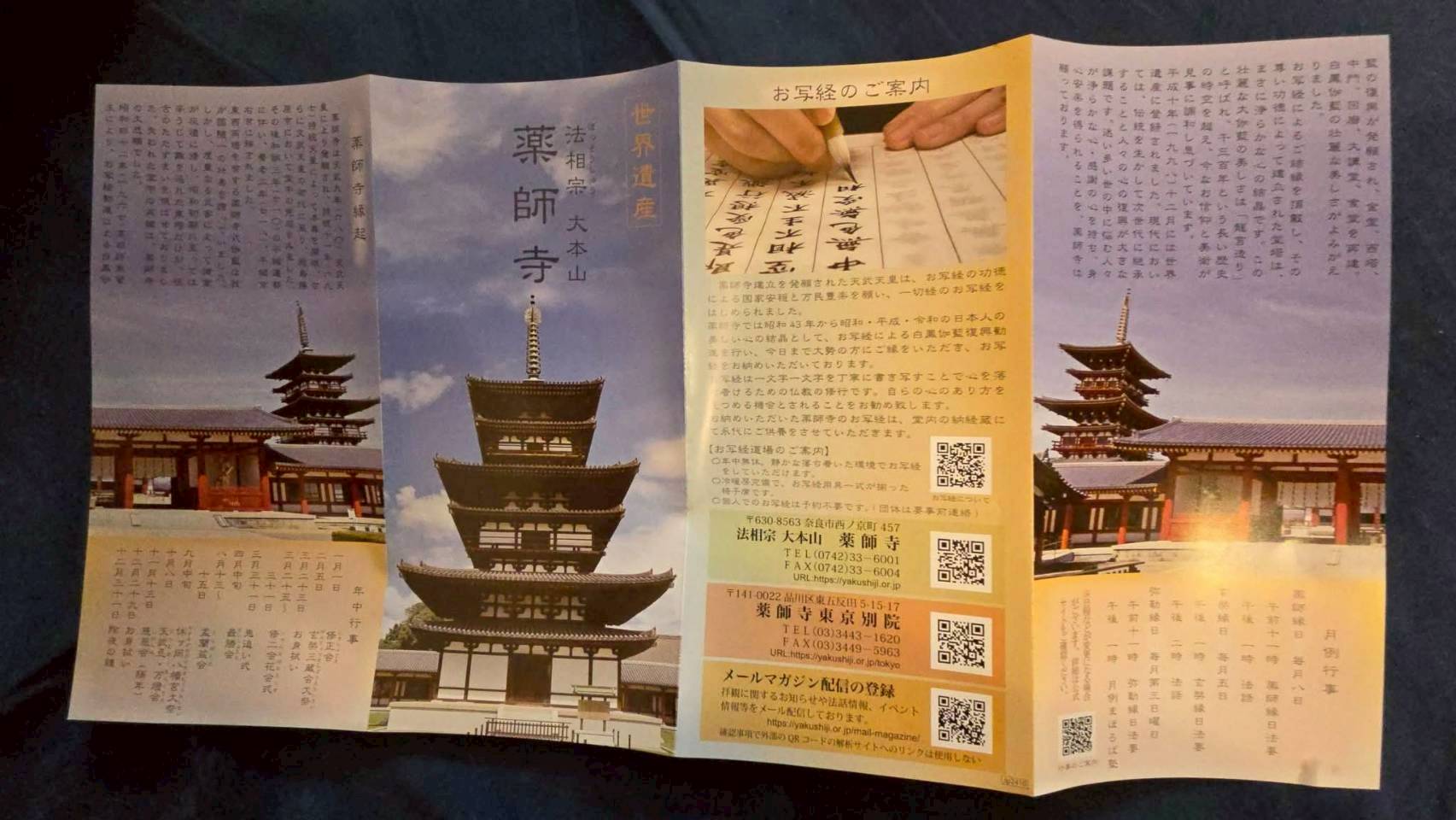
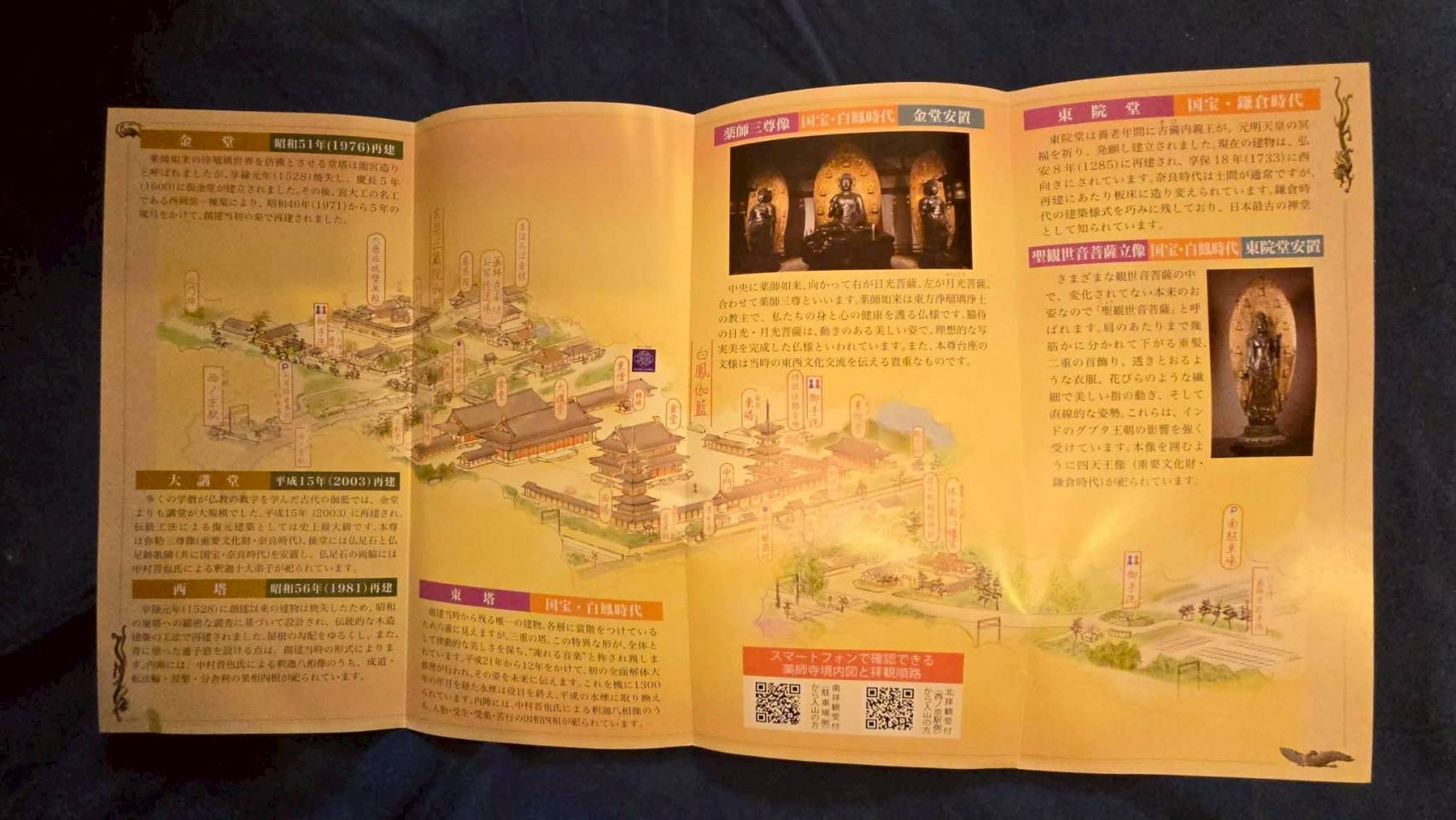
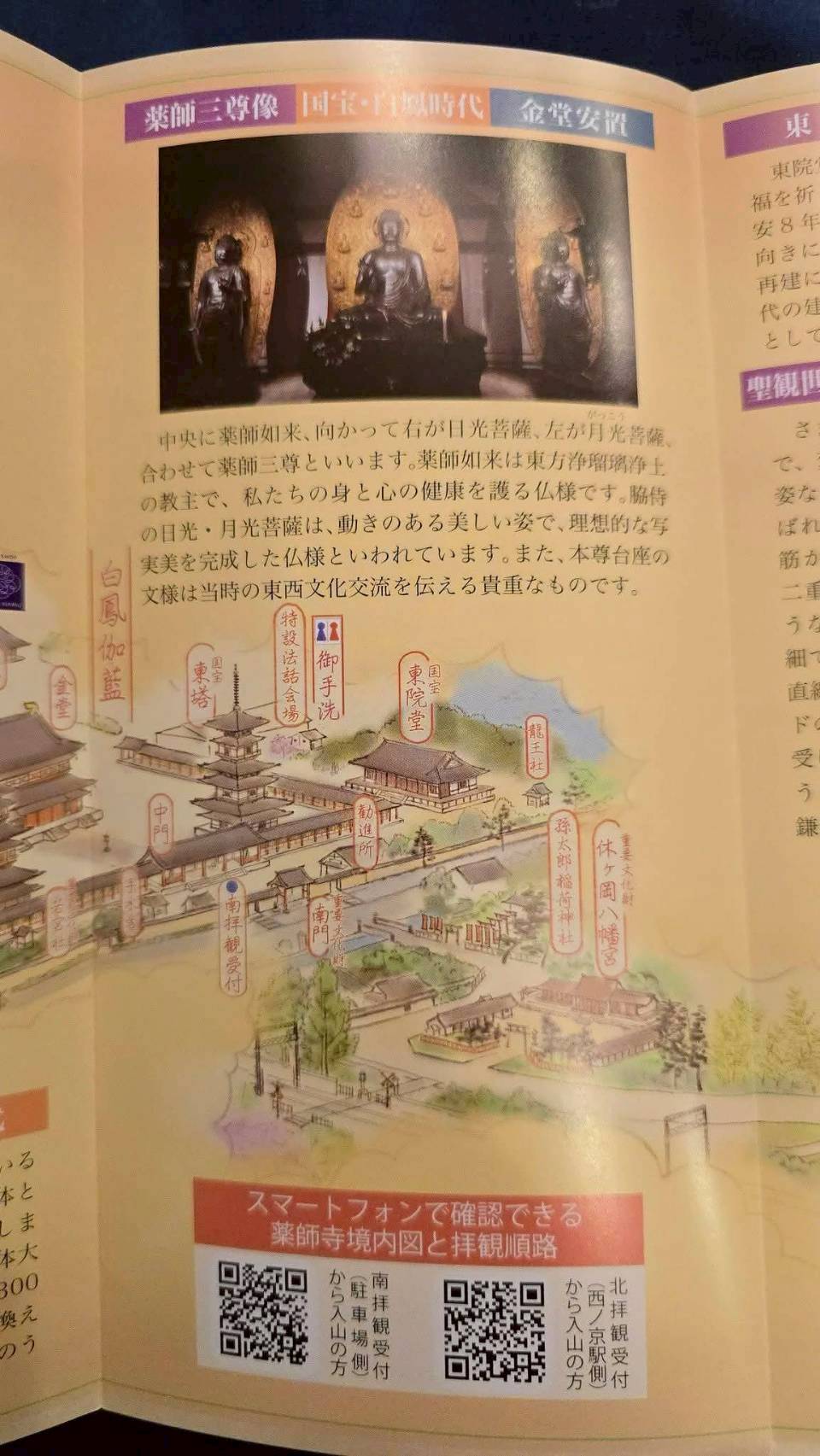
From Sun Moon Lake to Nishinokyo, the Lineage of Xuanzang Sanzang Shines Like the Lapis Lazuli Light of Yakushi Buddha
This is a legendary story that spans China, Japan, and Taiwan, interweaving the fires of modern war with a millennium of passion for seeking the Dharma.
From the soil of Nanjing to Heijo-kyo in Nara, and then to Sun Moon Lake in Taiwan, the circulation of this “Parietal Bone Relic of Master Xuanzang” symbolizes the continuously transmitted vitality of the Hosso Yogacara Sect.
1. The Millennium Circulation of Xuanzang’s Relic: From Chang’an and Nanjing to Shared Reverence in Two Lands
The relics enshrined at Nara Yakushi-ji and Sun Moon Lake Xuanzang Temple share the same origin; both are Master Xuanzang’s most precious “parietal bone relic.”
- Historical Disappearance and Resurgence
- In 664 AD, Master Xuanzang passed away in Chang’an. He was originally buried in Bailuyuan and later moved to Xingjiao Temple. During the Huang Chao Rebellion at the end of the Tang Dynasty, to protect the holy bones, monks moved them to Mount Zhongnan, and after many relocations, they arrived in Nanjing. With the change of eras, this history was once buried in weeds and wilderness.
- Discovery Amidst the Flames of War (Nanjing 1942)
- During World War II, while the Japanese army was excavating for construction at the site of the Grand Bao’en Temple in Yuhuatai, Nanjing, they accidentally discovered a stone casket. The casket contained Buddha statues, a silver box, and most importantly, a portion of Master Xuanzang’s parietal bone relic. This discovery shocked East Asia.
- Division and Welcoming of the Lineage
- Jion-ji in Japan: In 1942, a portion of the holy bones was sent to Japan. They were initially enshrined at Zojo-ji in Tokyo and later moved to Jion-ji in Saitama Prefecture.
- Xuanzang Temple at Sun Moon Lake: In 1955, the Japanese side decided to return a portion of the holy bones to Taiwan. They were first enshrined at Xuanguang Temple and moved to the current Xuanzang Temple at Sun Moon Lake in 1965.
- Nara Yakushi-ji: As the head temple of the Hosso Sect (Yogacara Sect) in Japan, Yakushi-ji has always regarded Xuanzang as its founder. In 1981, Yakushi-ji received a portion of the relic from Jion-ji and built the magnificent “Genjo-sanzo-in.”
- Point of Origin: What is enshrined in both places is exactly the same Dharma body excavated in Nanjing back then. This relic connects the two major Yogacara practice centers in Taiwan and Japan, becoming the strongest proof of the Hosso Sect sharing “the same branches and continuous lineage.”
2. The Essence of Yogacara: The Bloodline Relationship Between Xuanzang and the Yogacarabhumi-Sastra
To understand the lineage of Yakushi-ji, one must understand Xuanzang and the “Yogacarabhumi-Sastra”. This treatise was not only the driving force behind Xuanzang’s westward journey to seek the Dharma but also the cornerstone of Hosso Yogacara studies.
- Why Did Xuanzang Have to Go?
- While studying in Chang’an, Xuanzang found that the various sects at the time had divergent and irreconcilable interpretations of Buddhist doctrines (especially theories on Buddha-nature and consciousness). He heard that Master Silabhadra was preaching the “Yogacarabhumi-Sastra” at Nalanda University in India. This masterpiece, said to have been directly transmitted by Maitreya Bodhisattva to Asanga Bodhisattva, was seen as an “encyclopedia” capable of answering all doctrinal disputes.
- Transmission of the Dharma at Nalanda
- After traveling 50,000 li to the West, when Xuanzang arrived at Nalanda, the centenarian Master Silabhadra was wishing to enter Nirvana due to illness and suffering. However, he dreamt of Guanyin Bodhisattva, who instructed him: He must wait for a monk from the Great Tang to arrive and teach the “Yogacarabhumi-Sastra” to him.
- Xuanzang stayed here for five years, intensely studying this treatise, and brought it back to Chang’an to translate into Chinese (totaling 100 volumes).
- The Establishment of the Hosso Sect
- Based on the thoughts of the “Yogacarabhumi-Sastra,” Xuanzang’s disciple Kuiji further developed it, officially establishing the Hosso Yogacara Sect.
- The Relationship Between Treatise and Sect: The “Yogacarabhumi-Sastra” is the “root,” while the Hosso Sect is the “application.” It detailed the operation of the Alaya-vijnana (the eighth consciousness) and how to transform consciousness into wisdom through “Yogacara contemplation practice.”
3. Nara Yakushi-ji: The Hall that Spatializes the Yogacarabhumi-Sastra
At Yakushi-ji, the relationship between Xuanzang and the “Yogacarabhumi-Sastra” is reified into magnificent architecture:
- The Daigando and the Maitreya Triad: The Daigando of Yakushi-ji enshrines Maitreya Nyorai. Because the “Yogacarabhumi-Sastra” was dictated by Maitreya, the Hosso Sect monks lecturing here are re-enacting the grand occasion of Maitreya transmitting the Dharma to Xuanzang.
- Murals in the Genjo-sanzo-in: In the mural hall behind the Xuanzang Pagoda, the arduous route of Xuanzang crossing the Gobi Desert to Nalanda in search of this treatise is painted, symbolizing the Dharma seeker’s ultimate pursuit of wisdom (Yogacara).
4. Conclusion
“From the clouds and mist of Sun Moon Lake to the tolling bells of Nishinokyo in Nara, the holy bones of Master Xuanzang span thousands of miles, guarding the truth of the same scroll of the Yogacarabhumi-Sastra.
Master Xuanzang not only brought back the scriptures but also opened the door for us to explore the workings of the mind and consciousness.
Whether we are at Nara Yakushi-ji or looking down at the lake’s glow at Xuanzang Temple at Sun Moon Lake, what we touch is that millennium-old persistence of ‘transforming consciousness into wisdom.'”
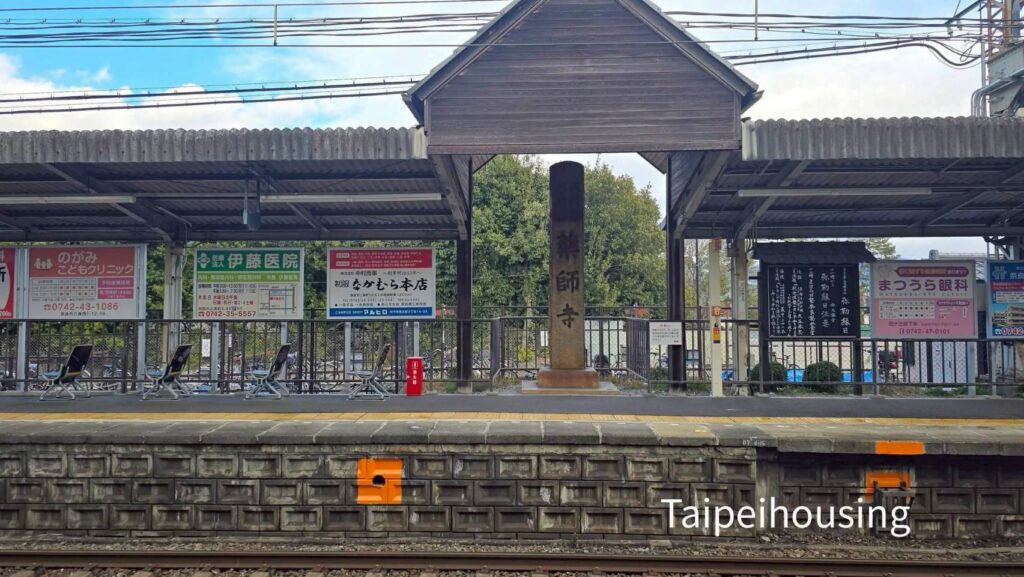
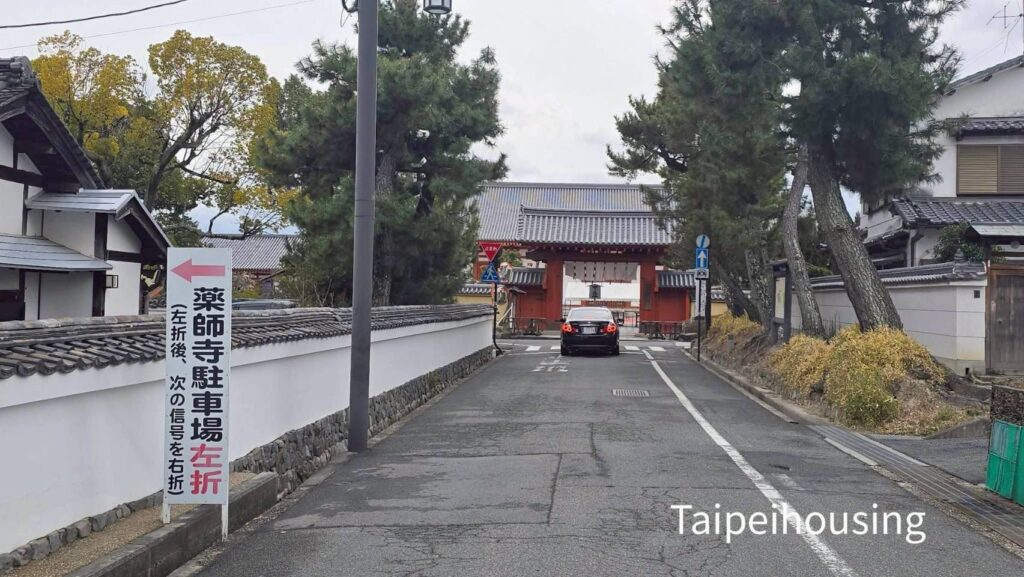
5. How to Reach Nara Yakushi-ji from JR Kyoto Station
This is the route that allows you to transition most quickly from the “Kyoto atmosphere” to the “Yakushi Lapis Lazuli Pure Land”:
- Most Recommended Option (Direct Kintetsu): Transfer directly to the Kintetsu Kyoto Line from inside JR Kyoto Station.
- Take the “Limited Express” or “Express” (towards Kashiharajingu-mae).
- Alight at “Nishinokyo” Station. (Limited Express takes about 35 minutes; Express takes about 45 minutes).
- After exiting the station: The entrance to Yakushi-ji is right in front of you, just a 1-minute walk away.
- JR Exclusive Option (Bus transfer required): Take the JR Nara Line “Miyakoji Rapid” at JR Kyoto Station.
- Arrive at JR Nara Station (Travel time approx. 45 minutes).
- Transfer to Nara Kotsu Bus (Routes 63, 70, 72, or 97) at the West Exit of JR Nara Station, and get off at the “Yakushi-ji” stop.
Suggestion: The grounds of Yakushi-ji and Genjo-sanzo-in are vast. If you enter from “Nishinokyo” Station, the route will be the smoothest. You can first admire the East and West Pagodas, and then enter the Genjo-sanzo-in to feel the resonance of the lineage that crosses the straits.
Related Links:
- The Rippling Waters of Sun Moon Lake and Xuanzang Temple at Hanbi: https://taipeihousing.homes/玄奘寺-3/
- More information: https://www.facebook.com/share/p/1Cqkksfqek/