


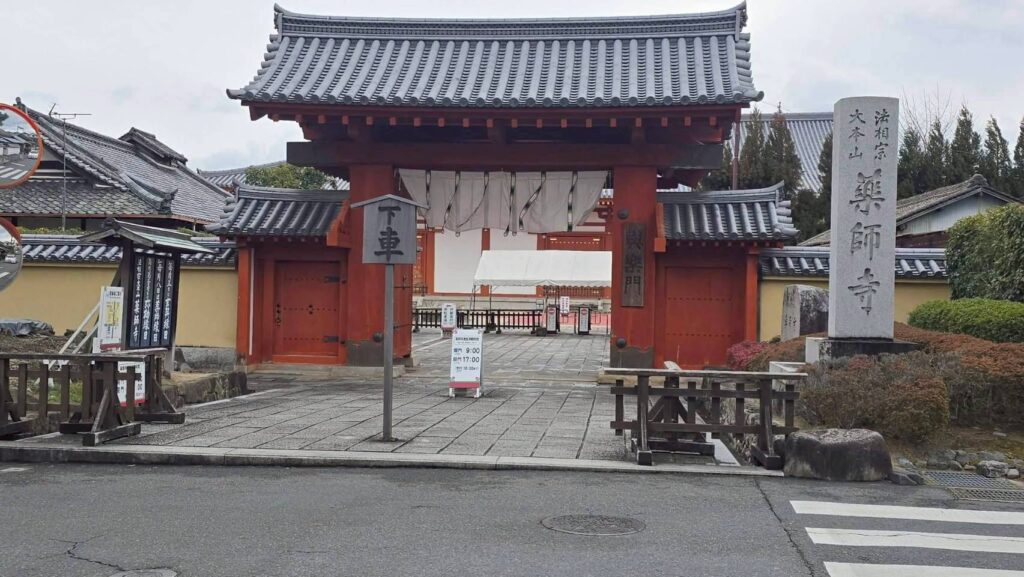
[Nara Yakushi-ji is the beginning of the Yakushi faith in Japan]
[The perfect harmony of exoteric and esoteric Buddhism between Yakushi-ji and Shin-Yakushi-ji]
[As physical evidence of the eastward spread of Buddhist culture, Nara Yakushi-ji holds the status of “Head Temple of the Hosso Sect”]
[List of temples in the “Saigoku 49 Yakushi Pilgrimage” 01 Yakushi-ji in Nishinokyo, Nara City, ranked first]
[From Sun Moon Lake to Nishinokyo, the lineage of Xuanzang Sanzang shines like the lapis lazuli light of Yakushi Buddha]
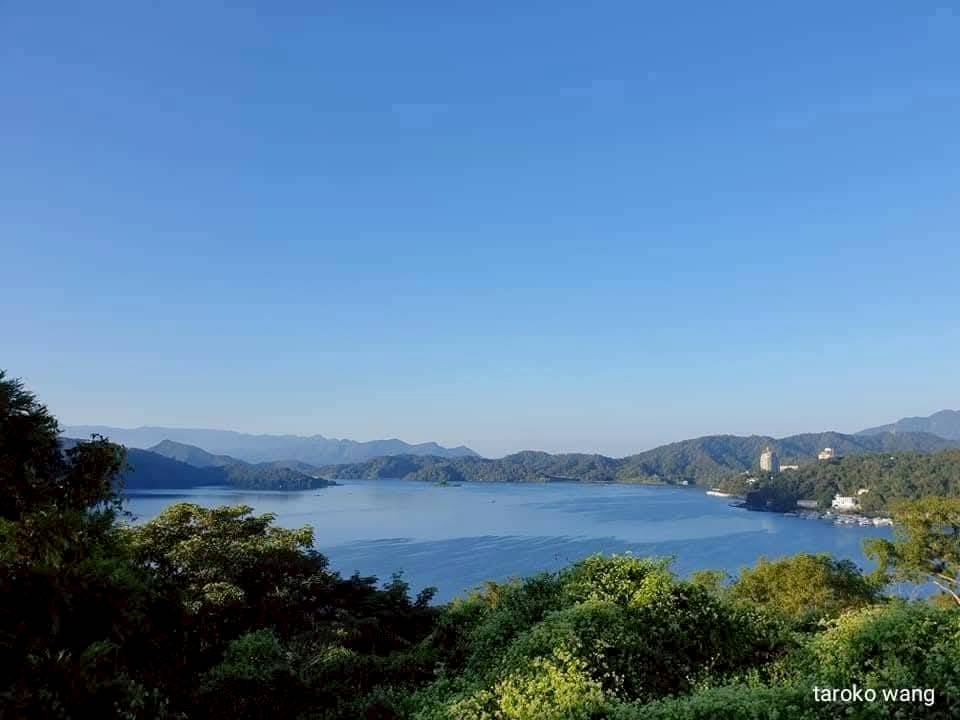
The first photo is Sun Moon Lake, and the last photo is Xuanzang Temple.
https://blog.udn.com/mobile/kocj/177434384
I made a special trip from JR Kyoto to Nara Yakushi-ji, simply because when I arrived in Nara decades ago, the time wasn’t right; you need to take the Kintetsu line to get there.
The Uniqueness of Nara Yakushi-ji Temple
1. In terms of “existing wooden architecture”: It is world-class in age
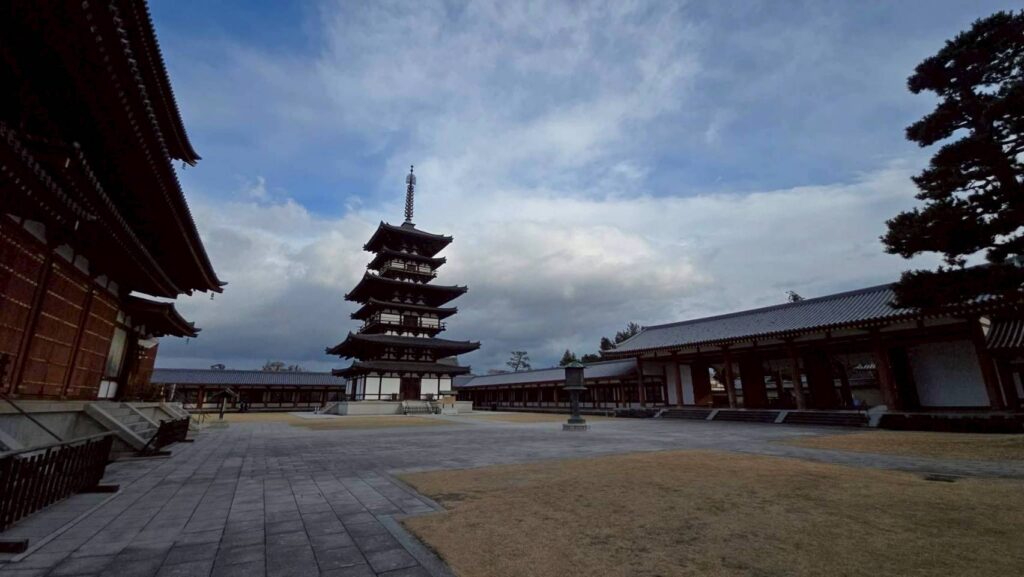
If we refer to the East Pagoda (the only surviving original structure of Yakushi-ji), it was built in 730 AD (Nara period). In the history of world wooden architecture, it is indeed an extremely rare “elderly” presence. Although it is later than the nearby Horyu-ji (7th century AD, the world’s oldest wooden structure), among architectures “specifically dedicated to Yakushi Buddha,” the East Pagoda of Yakushi-ji is undoubtedly one of the oldest wooden structures globally.
2. In terms of “temple building history”: It is the beginning of the Japanese Yakushi faith
Yakushi-ji was first built in 680 AD (during the reign of Emperor Tenmu). In China, although there were many earlier Yakushi halls during the Sui and Tang dynasties, most were destroyed by wars or religious persecutions (such as Emperor Wuzong of Tang’s suppression of Buddhism), and the original wooden structures on their original sites are no longer to be seen.
- Its status in Japan: The “Yakushi Nyorai” of Nara Yakushi-ji and Horyu-ji entered the vision of the Japanese imperial family at almost the same time. Therefore, Yakushi-ji is recognized as the earliest official temple-natured Yakushi sacred site in Japan.
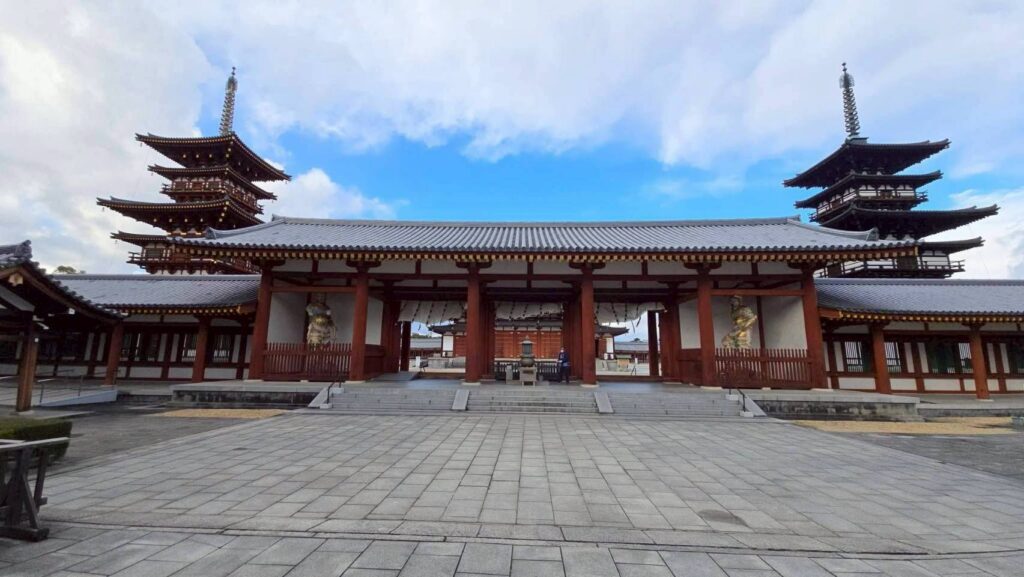
3. Chronological relationship with “Shin-Yakushi-ji”
This is a common misunderstanding:
- Yakushi-ji (Main Temple): Vowed to be built in 680 AD.
- Shin-Yakushi-ji: Established in 747 AD.
As mentioned earlier, the word “Shin” (New) in ancient Japanese represents “miraculous” (Reigen-arata), but in terms of chronological order, Yakushi-ji (the main temple) is indeed older than Shin-Yakushi-ji.
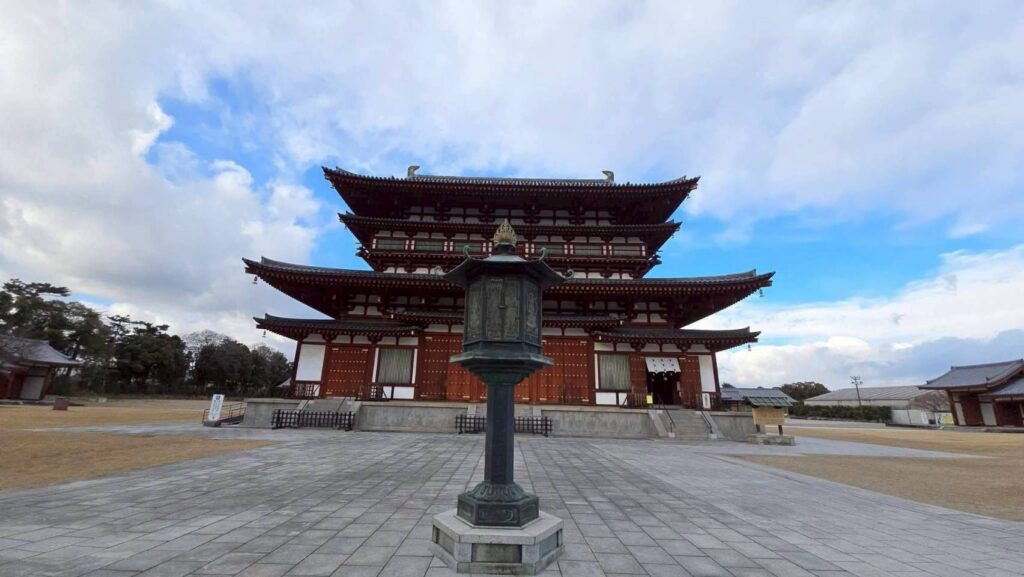
World Heritage: Physical Evidence of the Eastward Spread of Buddhist Culture and the Head Temple of the Hosso Sect
An important historical correction: The Yakushi faith in the Sui and Tang dynasties. If we look at the “whole world,” China already had numerous records of stone caves (such as the Longmen Grottoes) and temples related to Yakushi Buddha during the Sui dynasty (6th century AD).
- Historical facts: The Yakushi faith originated in India and was introduced to China via the Western Regions (the Eastern Jin dynasty monk Srimitra was the first to translate the Yakushi Sutra), with related scriptures and worship existing as early as the 4th century.
- The special status of Yakushi-ji: Although it may not be the world’s oldest in terms of “age,” it is the world’s most completely preserved temple specifically dedicated to Yakushi Buddha, with the clearest lineage transmission (Hosso Sect), and possessing original wooden components from the 8th century.
The reason Nara Yakushi-ji could be listed as a World Cultural Heritage site by UNESCO (as part of the “Historic Monuments of Ancient Nara”) is not only because of the artistic achievements of its architecture itself, but also because it preserves a special vocabulary that perfectly integrates the 7th-century “Hakuho period” style with Tang dynasty architectural styles.
1. The Uniqueness of Architectural Aesthetics: Frozen Music
The architectural style of Yakushi-ji is called the “Hakuho style,” an extremely gorgeous and rhythmic style developed in Japan after absorbing Tang dynasty architectural culture.
- The “Mokoshi” of the East Pagoda and Visual Rhythm
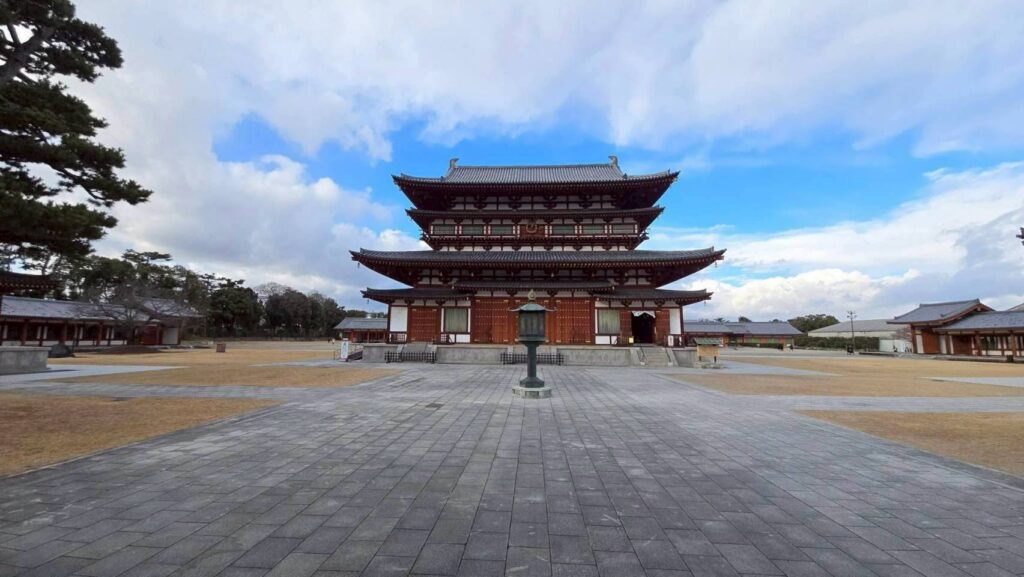
- The illusion of three tiers and six stories: The East Pagoda of Yakushi-ji (a National Treasure) is the only original building in the entire temple surviving from 1,300 years ago. It looks like a six-story pagoda on the surface, but it actually only has three stories. This is because a “mokoshi” (pent roof/decorative eaves) was added under the main eaves of each story.
- Rhythmic beauty: This alternating design of large and small eaves breaks the heaviness of traditional pagoda architecture, creating a light, bouncing rhythm like a musical scale, thus earning it the praise of being “frozen music.”
- Perfectly Symmetrical Twin Pagoda Layout
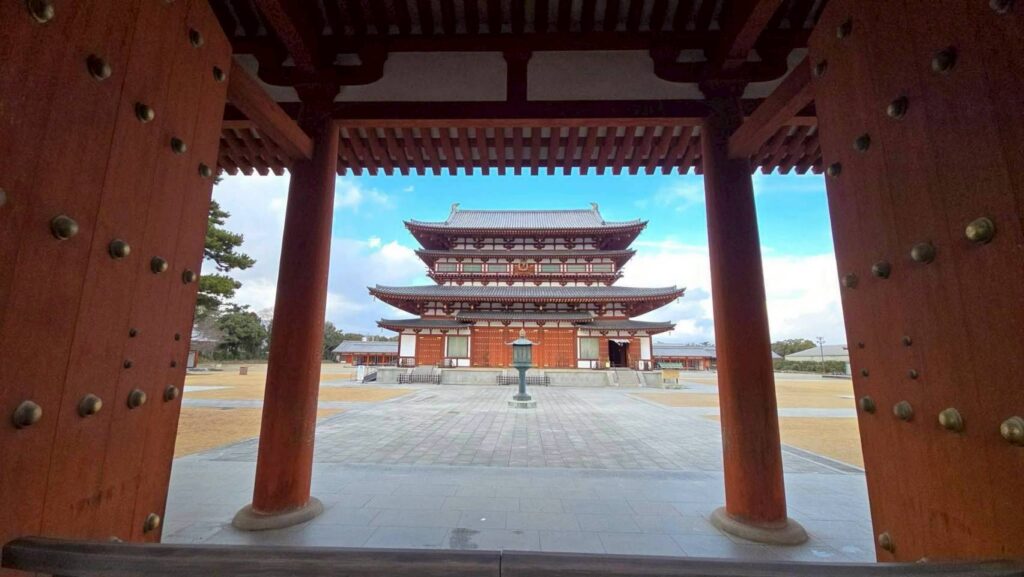
- Yakushi-ji style layout: Yakushi-ji is the earliest temple in Japan to place symmetrical twin pagodas (East Pagoda and West Pagoda) in front of the Kondo (Main Hall). This highly symmetrical layout emulates the most advanced urban and temple planning of the Tang dynasty at that time, showing the majesty and sense of order of the Yamato Kingdom in establishing a centralized state.
- Color and Craftsmanship: The Realization of the Dragon Palace
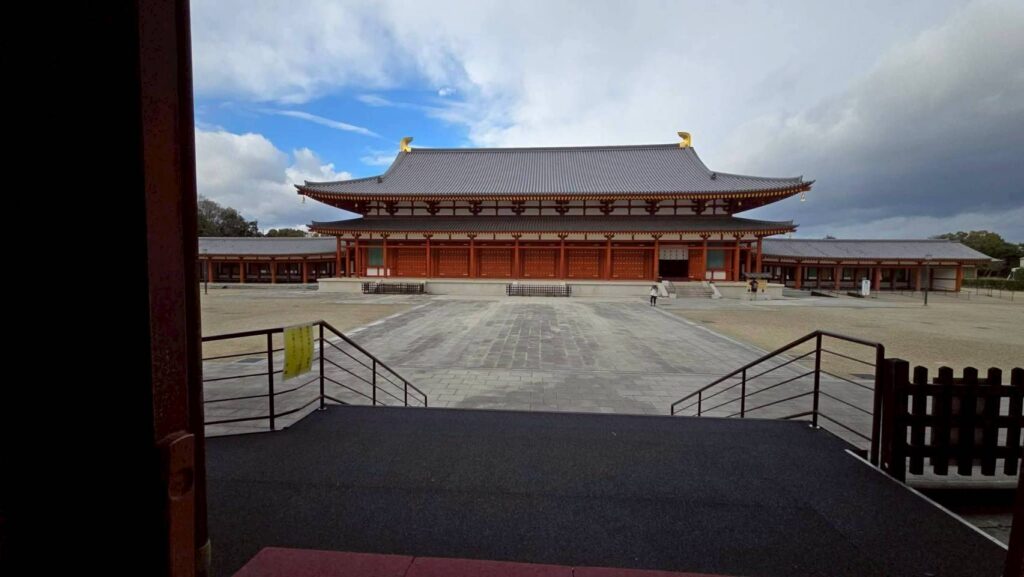
- Green and vermilion: The reconstructed West Pagoda and Kondo of Yakushi-ji restored the vibrant “Aoni” (green) and “vermilion” of the Hakuho period. This bold use of color, coupled with gorgeously decorated brackets and gilt-bronze components, makes the entire temple shine like the legendary “Dragon Palace in the Sea,” reflecting the visual projection of the Yakushi Lapis Lazuli Pure Land in the human world.
2. Why did it become a World Heritage Site? (Criteria for Inscription)
Yakushi-ji was listed as a World Heritage site in 1998, primarily based on the following core values:
- Physical evidence of the eastward spread of Buddhist culture: Yakushi-ji is a cultural fruit borne on the East Asian islands after Buddhism was introduced to Japan from India via China. The grape arabesque patterns (Greek culture), lotus patterns (Indian culture), and the Four Symbols (Chinese culture) carved on the base of the Yakushi triad statues are historical ironclad proof that the ancient Silk Road cultural exchanges finally reached Japan.
- A living specimen of ancient architectural techniques: The East Pagoda of Yakushi-ji is one of the most exquisite wooden pagodas extant in the world. It not only demonstrates the precise wooden joint technology of the 8th century but has also stood firm through a thousand years of earthquakes and typhoons. The earthquake-resistant structural design it represents is still an important subject for architects studying ancient wisdom today.
- A model of cultural relic restoration and transmission: The special feature of Yakushi-ji lies in its “continuity of transmission.” Although many buildings were reconstructed in modern times, the reconstruction process strictly followed ancient techniques (such as using thousand-year-old Japanese cypress) and raised funds combined with the vow power of believers copying sutras. This combination of “intangible cultural heritage (sutra copying faith)” and “tangible architectural heritage” is seen as an excellent example of cultural asset preservation and revitalization.
3. The Special Status of Historical Lineage: The Head Temple of Yakushi Buddha
Among the many temples in Nara, Yakushi-ji holds the status of the “Head Temple of the Hosso Sect.” It not only preserves the teachings of the Yogacara school passed down by Master Xuanzang but also, through the faith of “Yakushi Nyorai,” became a common prayer center for both the Japanese imperial family and the common people.
The uniqueness of its architecture is essentially to create an “absolute space of purity.” When believers walk through the symmetrical temple complex and look up at the rhythmic eaves of the East Pagoda, their state of mind naturally transitions from restlessness to tranquility—this is exactly the spatial embodiment of “healing the mind” in the Yakushi teachings.
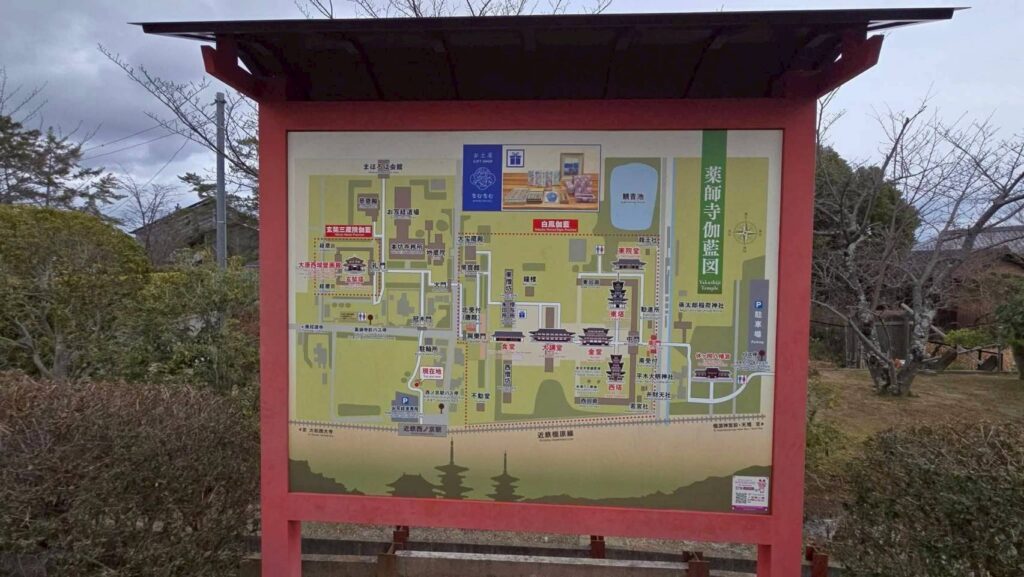
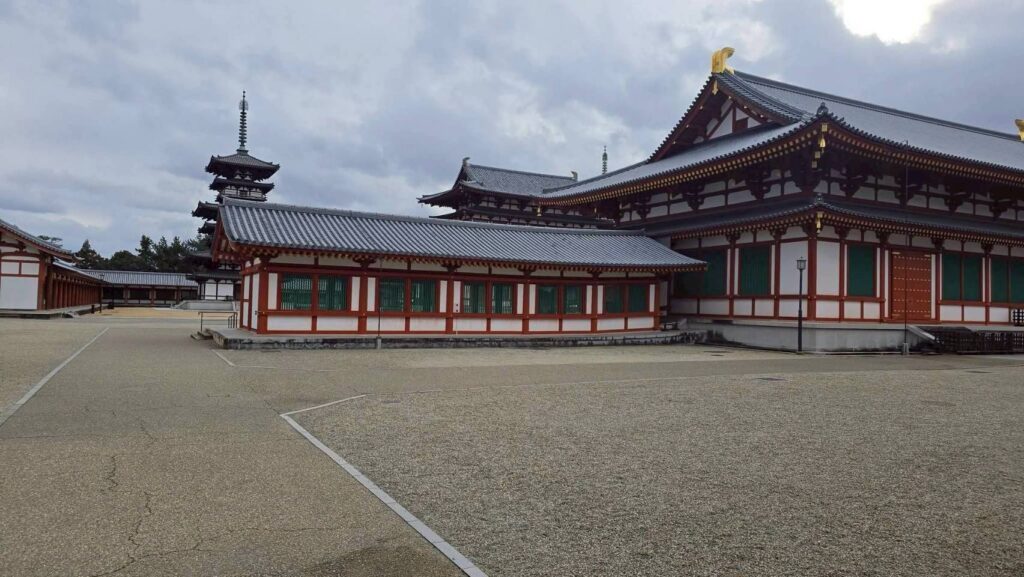
Nara Yakushi-ji and Shin-Yakushi-ji: Perfect Harmony of Exoteric and Esoteric Buddhism
Delving into the historical lineage, artistic characteristics, and a complete discourse on the significance in Buddhist practice (especially the perfect harmony of exoteric and esoteric) of these “two Yakushi temples” in Nara.
1. Nara Yakushi-ji: The Glorious Transmission of Hakuho Culture
- Historical Lineage and Spirit of Reconstruction
- Yakushi-ji was established in 680 AD; it is an official temple vowed to be built by Emperor Tenmu to pray for the Empress’s recovery from illness. Its core value lies in “compassionate healing.”
- The beauty of Hakuho: It represents the peak of Japanese Buddhist art, evolving from imitating the Tang dynasty to developing indigenous “Hakuho culture.” Under the leadership of Chief Abbot Koin Takada in the 20th century, funds were raised through “One Million Sutra Copyings,” successfully restoring magnificent buildings like the Kondo and West Pagoda.
- A sacred place for sutra copying: Yakushi-ji transformed “sutra copying” into a method of mass practice, allowing ordinary people to resonate with the compassionate vows of Yakushi Nyorai through every stroke of the brush.
- Uniqueness: Frozen Music
- The rhythmic sense of the East Pagoda: Featuring special “mokoshi” (pent roofs), it is praised as “frozen music.”
- The Yakushi Triad: The gilt-bronze statues of Yakushi Nyorai, Nikko Bosatsu, and Gakko Bosatsu in the Kondo display extremely high black-lacquer craftsmanship and realistic aesthetics.
2. Yakushi-ji vs. Shin-Yakushi-ji: A Comparison of the Two Temples
Although both temples revere Yakushi Nyorai, their characters are completely different:
| Dimension | Yakushi-ji | Shin-Yakushi-ji |
|---|---|---|
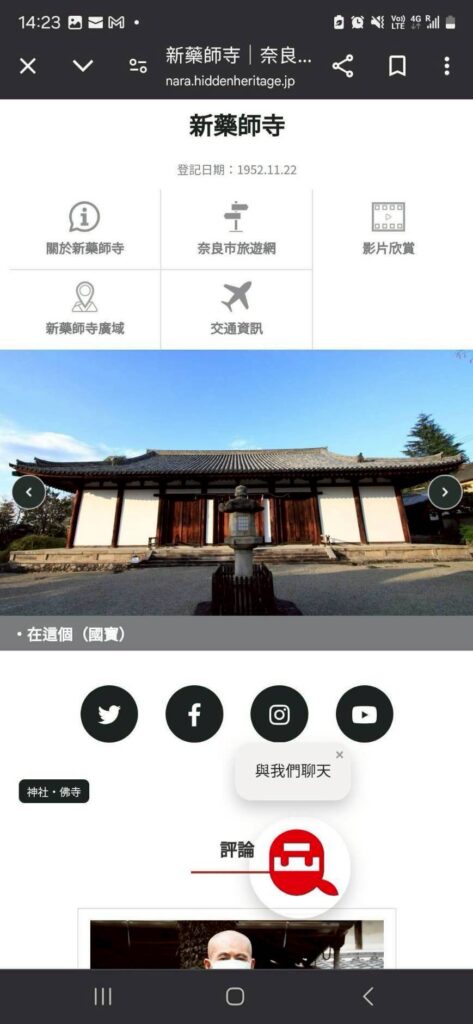
| Architectural Vocabulary | Grand, symmetrical, vermilion, and green (manifesting majesty) | Rustic, earthen colors, circular array (esoteric guardianship) |
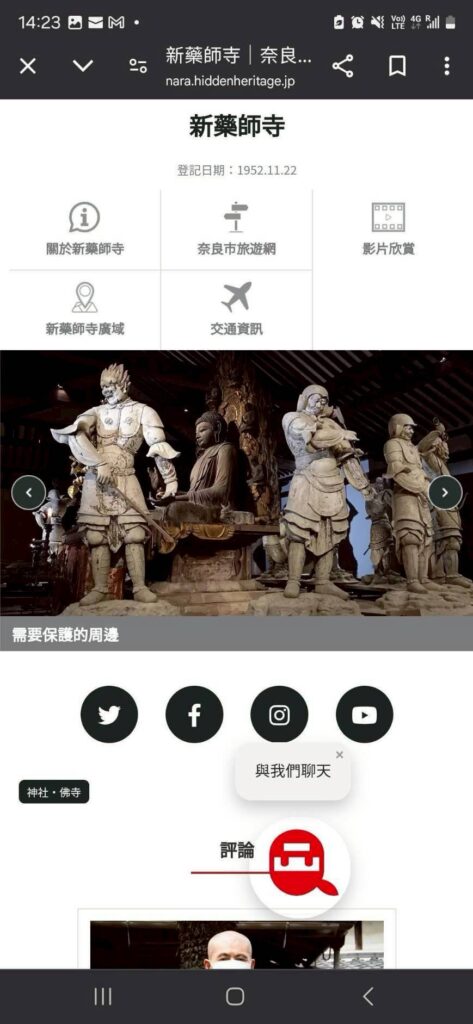
| Character of Buddha Statues | Yakushi Triad (Gilt-bronze): Compassionate, dignified, tranquil | Yakushi Nyorai (Wooden) + Twelve Heavenly Generals (Clay): Fierce, protective |
| Sense of Space | Open plain temple layout, suitable for mass worship | Compact circular main hall, suitable for personal visualization |

3. Connection with the “Perfect Harmony of Exoteric and Esoteric Yakushi Practice”
The Yakushi teachings are central to both Chinese and Japanese Esoteric Buddhism. These two temples happen to correspond to the merit accumulation of “Exoteric Buddhism” and the Dharma-protecting practice of “Esoteric Buddhism” respectively, reflecting the spirit of “Perfect Harmony.”
- Exoteric (Yakushi-ji): Merit and Vow Power
- The practice is mainly “exoteric,” emphasizing the Twelve Great Vows of Yakushi Nyorai.
- Practice connection: Large-scale sutra copying, offering lights, and worshipping the Yakushi Triad correspond to the accumulation of merit through “reciting names, prostrating, and chanting sutras” in exoteric teachings. It aligns with the Yakushi Sutra’s saying, “Whatever they seek, everything will be fulfilled.”
- Esoteric (Shin-Yakushi-ji): Protection and Formation
- The layout has a strong “esoteric” meaning.
- The Twelve Heavenly Generals Formation: The Twelve Heavenly Generals surrounding Yakushi Buddha correspond to the Twelve Yaksha Generals and the twelve hours/zodiac signs. In esoteric teachings, they represent Yakushi Nyorai’s “all-around protection” for practitioners.
- Mandala concept: The main hall layout itself is a three-dimensional Yakushi Mandala, echoing the esoteric concepts of “becoming a Buddha in this body, establishing boundaries for self-protection.”
- The Embodiment of Perfect Harmony
- Yakushi-ji provides the vast merit of exoteric teachings (through sutra copying and forming karmic connections with the masses).
- Shin-Yakushi-ji provides esoteric focus and protection (through visualization connections with the generals to eliminate obstacles).
- The combination of these two symbolizes that when practicing the Yakushi teachings, one needs both compassion (healing the mind) and might (exorcising evil) to achieve complete healing of body, mind, and spirit.
Conclusion: These two Yakushi temples in Nara—one demonstrating Yakushi Buddha’s compassionate vow of universal salvation with “magnificent beauty,” and the other displaying Yakushi Buddha’s protective power with “sacredness”—are precisely the perfect embodiment of the harmony between exoteric and esoteric teachings.
List of Temples in Japan’s “Saigoku 49 Yakushi Pilgrimage”
01 Yakushi-ji in Nishinokyo, Nara City, ranked first
- 01 Yakushi-ji: Nishinokyo-cho, Nara City / Hosso Sect
- 02 Ryosen-ji: Nakamachi, Nara City / Ryosen-ji Shingon Sect
- 03 Hannya-ji: Hannyaji-cho, Nara City / Shingon Ritsu Sect
- 04 Kofuku-ji: Noborioji-cho, Nara City / Hosso Sect
- 06 Shin-Yakushi-ji: Takabatake-cho, Nara City / Kegon Sect
- 07 Kume-dera: Kume-cho, Kashihara City, Nara Prefecture / Shingon Sect Omuro School
- 08 Muro-ji: Muro, Uda City, Nara Prefecture / Shingon Sect Muroji School
- 09 Kongo-ji: Muro, Uda City, Nara Prefecture / Shingon Sect Muroji School (Based on original text)
- 10 Ryusen-in: Koyasan, Koya-cho, Ito District, Wakayama Prefecture / Koyasan Shingon Sect
- 11 Takamuro-in: Koyasan, Koya-cho, Ito District, Wakayama Prefecture / Koyasan Shingon Sect
- 12 Zenrin-ji: Hatagawa, Kainan City, Wakayama Prefecture / Koyasan Shingon Sect
- 13 Zenrin-ji (Fukuyama): Hatagawa, Kainan City, Wakayama Prefecture / Koyasan Shingon Sect (Based on original text)
- 14 Nonaka-dera: Nonoue, Habikino City, Osaka Prefecture / Koyasan Shingon Sect
- 15 Ebaru-ji (Iebara-ji): Ebaraji-cho, Nishi Ward, Sakai City, Osaka Prefecture / Koyasan Shingon Sect
- 16 Shitenno-ji: Shitennoji, Tennoji Ward, Osaka City / Koyasan Shingon Sect
- 18 Kyuan-ji: Fushio-cho, Ikeda City, Osaka Prefecture / Koyasan Shingon Sect
- 19 Koya-dera: Teramoto, Itami City, Hyogo Prefecture / Koyasan Shingon Sect
- 20 Toko-ji: Mondo-Nishimachi, Nishinomiya City, Hyogo Prefecture / Koyasan Shingon Sect
- 21 Kazanin Bodai-ji: Mondo-Nishimachi, Nishinomiya City, Hyogo Prefecture / Koyasan Shingon Sect (Based on original text)
- 22 Kakurin-ji: Kakogawa-cho, Kakogawa City, Hyogo Prefecture / Tendai Sect
- 23 Ikaruga-dera: Taishi-cho, Ibo District, Hyogo Prefecture / Tendai Sect
- 24 Jinshaku-ji: Fukusaki-cho, Kanzaki District, Hyogo Prefecture / Tendai Sect
- 25 Tasshin-ji: Hikami-cho, Tamba City, Hyogo Prefecture / Tendai Sect
- 26 Choan-ji: Okunobe, Fukuchiyama City, Kyoto Prefecture / Rinzai Sect Nanzen-ji School
- 27 Tennei-ji: Oro, Fukuchiyama City, Kyoto Prefecture / Rinzai Sect Myoshin-ji School
- 28 Daijo-ji: Kasumi-ku, Kami-cho, Mikata District, Hyogo Prefecture / Koyasan Shingon Sect
- 29 Onsen-ji: Kinosaki-cho, Toyooka City, Hyogo Prefecture / Koyasan Shingon Sect
- 30 Tane-dera: Taneji, Maizuru City, Kyoto Prefecture / Shingon Sect Toji School
- 31 Soji-ji: Guji-cho, Nagahama City, Shiga Prefecture / Shingon Sect Buzan School
- 32 Saimyo-ji: Ikadera, Kora-cho, Inukami District, Shiga Prefecture / Tendai Sect
- 33 Ishiyakushi-ji: Ishiyakushi-cho, Suzuka City, Mie Prefecture / Shingon Sect Toji School
- 36 Miroku-ji: Nishitawara, Nabari City, Mie Prefecture / Shingon Sect Buzan School
- 37 Joruri-ji: Kamo-cho, Kizugawa City, Kyoto Prefecture / Shingon Ritsu Sect
- 39 Daigo-ji: Daigo-Higashioji-cho, Fushimi Ward, Kyoto City / Shingon Sect Daigo School
- 40 Kaiko-ji: Sennyuji-Sannai-cho, Higashiyama Ward, Kyoto City / Shingon Sect Sennyuji School
- 41 Shobo-ji: Oharano-Kasuga-cho, Nishikyo Ward, Kyoto City / Shingon Sect Toji School
- 43 Jinzo-ji: Hiedano-cho, Kameoka City, Kyoto Prefecture / Rinzai Sect Myoshin-ji School
- 44 Jingo-ji: Umegahata-Takao-cho, Ukyo Ward, Kyoto City / Koyasan Shingon Sect
- 45 Sanzen-in Monzeki: Ohara-Shorinin-cho, Sakyo Ward, Kyoto City / Tendai Sect
- 47 Zensui-ji: Iwane, Konan City, Shiga Prefecture / Tendai Sect
- 48 Mii-dera Suikan-ji: Onjoji-cho, Otsu City, Shiga Prefecture (inside Mii-dera) / Tendaijimon Sect
- 49 Enryaku-ji: Sakamoto Honmachi, Otsu City, Shiga Prefecture / Tendai Sect
(Note: The list is organized according to the original text.)
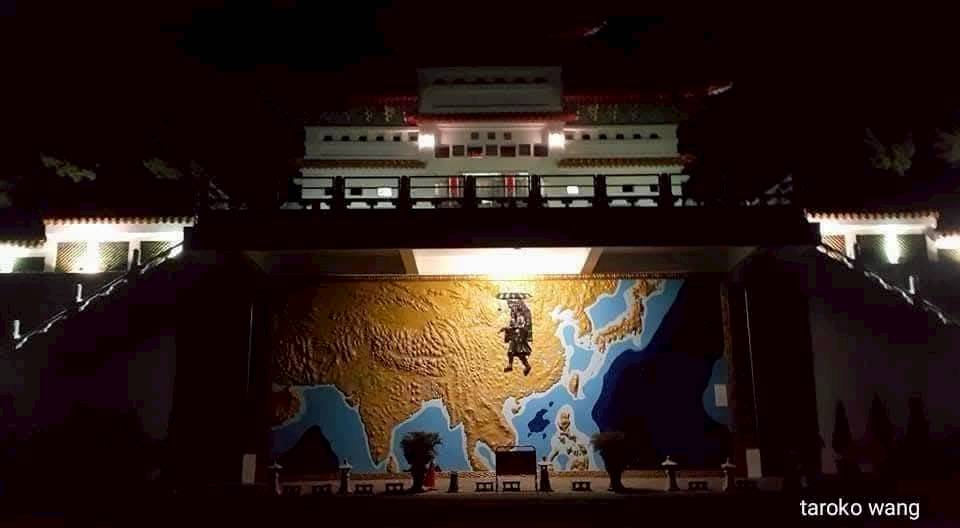
From Sun Moon Lake to Nishinokyo, the Lineage of Xuanzang Sanzang Shines Like the Lapis Lazuli Light of Yakushi Buddha
This is a story of “lineage transmission” that connects Japan’s ancient capital Nara with Taiwan’s Sun Moon Lake, crossing geographical boundaries. These two temples jointly guard the soul of the same great master—Xuanzang Sanzang. He is also the translator of the Yakushi Sutra.
1. Nara Yakushi-ji and Sun Moon Lake Xuanzang Temple: The Common Origin of Xuanzang’s Relics
The origin of these two temples revolves around the legendary circulation of the “Holy Relics of Master Xuanzang.”
- Historical Turning Point: From Chang’an to Nanjing, and then to Japan
Master Xuanzang’s relics were originally buried in Xi’an but were later lost due to war and turmoil. In 1942, the Japanese army excavated a stone casket in Nanjing, which contained a portion of Master Xuanzang’s parietal bone relic. Later, this portion of the relic was respectfully brought to Japan and enshrined at Jion-ji Temple in Saitama Prefecture. - The Bloodline Connection Between the Two Places
- Sun Moon Lake Xuanzang Temple: In 1955, after efforts by Buddhists and the government at the time, the Japanese side decided to return a portion of Xuanzang’s relic to Taiwan. It was initially enshrined at Xuanguang Temple and later moved to the officially completed Xuanzang Temple at Sun Moon Lake in 1965. This place became the core of Taiwan’s Hosso Sect and Xuanzang faith.
- Nara Yakushi-ji: As the head temple of the Hosso Sect in Japan, Yakushi-ji has always regarded Master Xuanzang as the originator of its lineage. In 1981, Yakushi-ji also respectfully received a portion of Master Xuanzang’s relic from Jion-ji in Saitama and built the magnificent “Genjo Sanzo-in” (Xuanzang Sanzang Courtyard).
- Summary of Origins
- Same Source: Both temples enshrine the very same parietal bone relic excavated in Nanjing back then.
- Shared Lineage Master: Both temples revere Master Xuanzang as the patriarch of the Hosso Sect. The “Genjo Sanzo-in” of Yakushi-ji and the “Xuanzang Temple” of Sun Moon Lake share a spiritual bond of “common essence and continuous lineage.”
When you see the Xuanzang Pagoda at Yakushi-ji, that thrill fully resonates with the spirit of seeking the Dharma you perceive at the Xuanzang Temple at Sun Moon Lake. One of the immortal translators of the eternally supreme Yakushi Sutra is none other than Master Xuanzang!
Transportation Guide: How to Quickly Reach Nara Yakushi-ji from JR Kyoto Station
Yakushi-ji is located in the “Nishinokyo” area on the west side of Nara City. Departing from Kyoto, taking JR and transferring to Kintetsu or taking Kintetsu directly are the fastest ways (although you asked about departing from JR, the destination station is most conveniently Nishinokyo Station on the Kintetsu line).
1. Recommended Fastest Route (JR Transfer Method)
- Starting point: JR Kyoto Station
- Ride: JR Nara Line “Miyakoji Rapid” (towards Nara).
- Arrival: JR Nara Station (Travel time approx. 45 minutes).
- Transfer: Walk out of the East Exit of JR Nara Station and transfer to the Nara Kotsu Bus (Routes 63, 70, 72, or 97).
- Alight: Get off at the “Yakushi-ji” stop.
2. Most Effort-Saving Route (Direct Kintetsu Method – Recommended)
Even though you are at JR Kyoto Station, it is recommended to walk to the Kintetsu Kyoto Station inside the station complex (right next to the JR station):
- Ride: Kintetsu Limited Express towards “Kashiharajingu-mae”.
- Alight: “Nishinokyo” Station.
- Walk: It’s about a 1-minute walk to Yakushi-ji after exiting the station.
- Advantage: This is the fastest and requires the least walking. The limited express takes about 35 minutes to arrive.
“From Sun Moon Lake to Nishinokyo, the lineage of Xuanzang Sanzang shines like the lapis lazuli light of Yakushi Buddha. In Taiwan, we look up to the holy relics of Xuanzang Temple and remember the hardships of seeking the scriptures; in Nara, the sacred wood of Yakushi-ji bears witness to the thousand-year unfading vitality of the Hosso Sect. This is not just a connection between two World Heritage sites or holy places, but a shared validation of the spirit of seeking the Dharma.”
Related Links:
- The Rippling Waters of Sun Moon Lake and Xuanzang Temple at Hanbi
- More information: https://www.facebook.com/share/p/1Cqkksfqek/